The Road to Everest
Delhi → Kathmandu → Lukla
March 2019
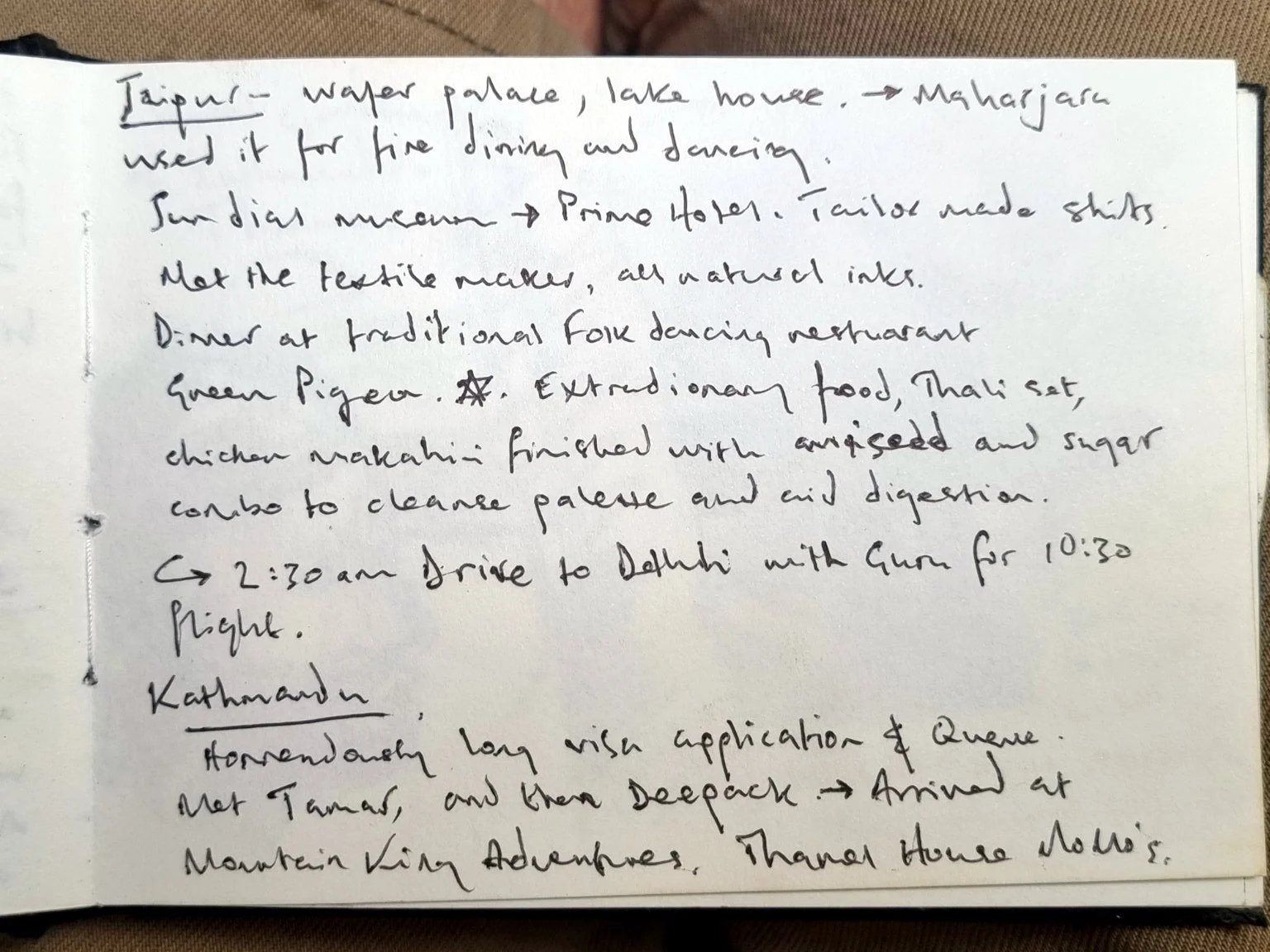
The road to Everest began some distance from the mountain itself.
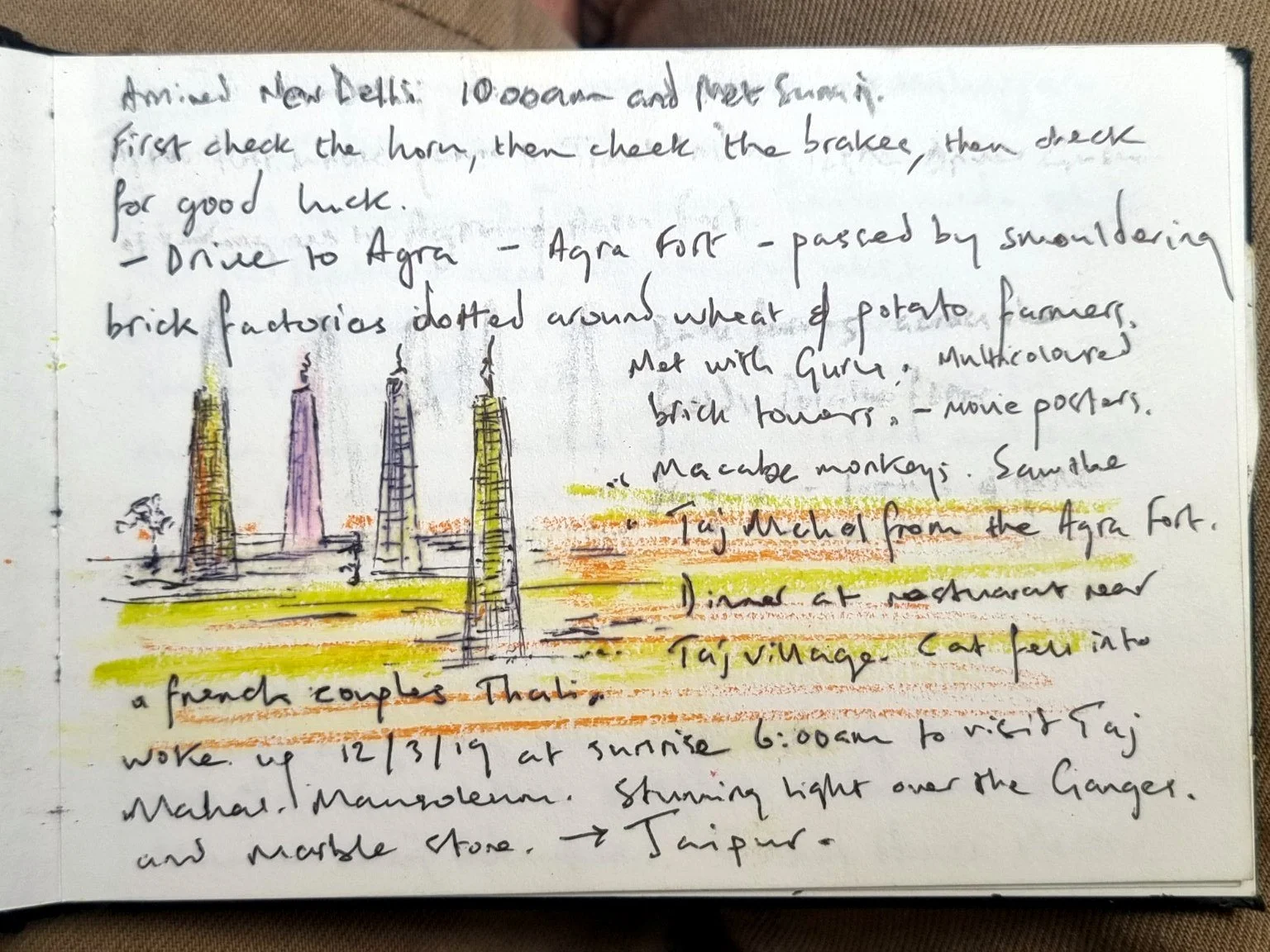
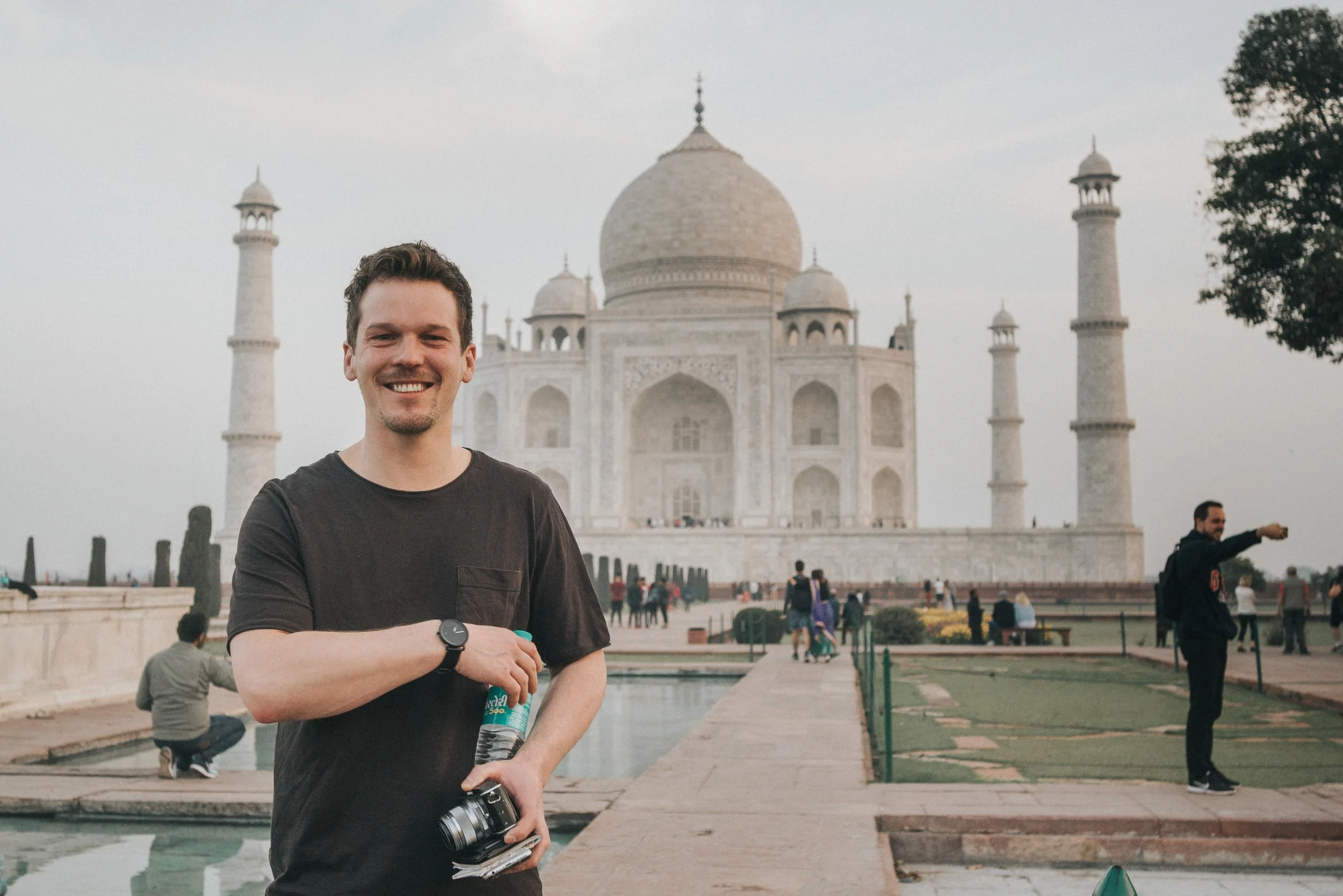
We landed in Delhi before travelling through northern India towards Agra and Jaipur. My notebook quickly filled with the sort of details that tend to disappear from memory first: smouldering brick factories beside fields of wheat and potatoes, macaque monkeys, painted signs, movie posters and the extraordinary morning light falling across the marble of the Taj Mahal.
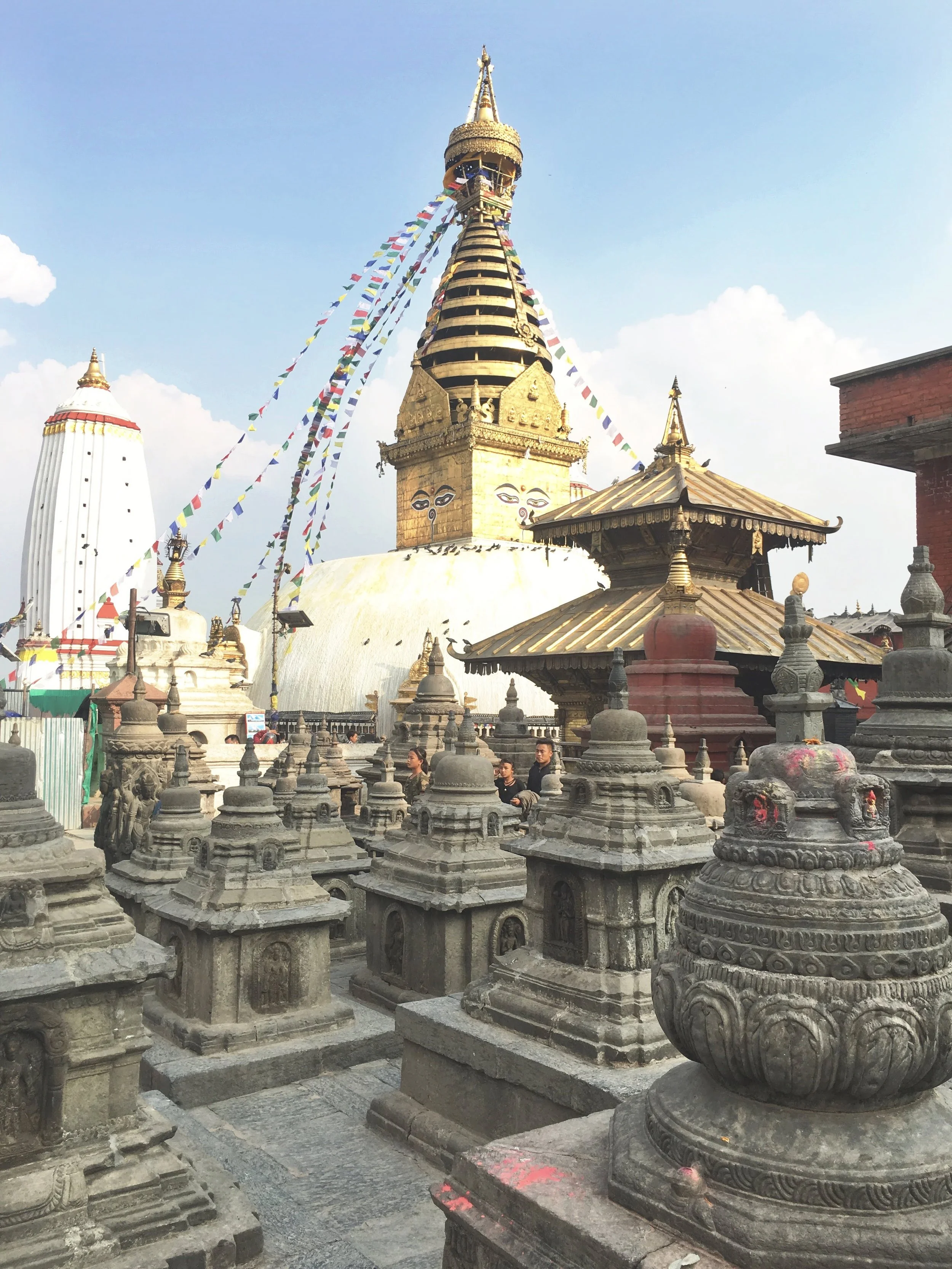
In Jaipur we visited the Water Palace and the old astronomical instruments of Jantar Mantar, before finding our way into textile workshops where fabrics were still being printed using natural dyes. It was an intense few days of colour, noise and heat before an overnight drive returned us to Delhi for the flight north.
Then came Kathmandu.
WAITING FOR THE MOUNTAINS
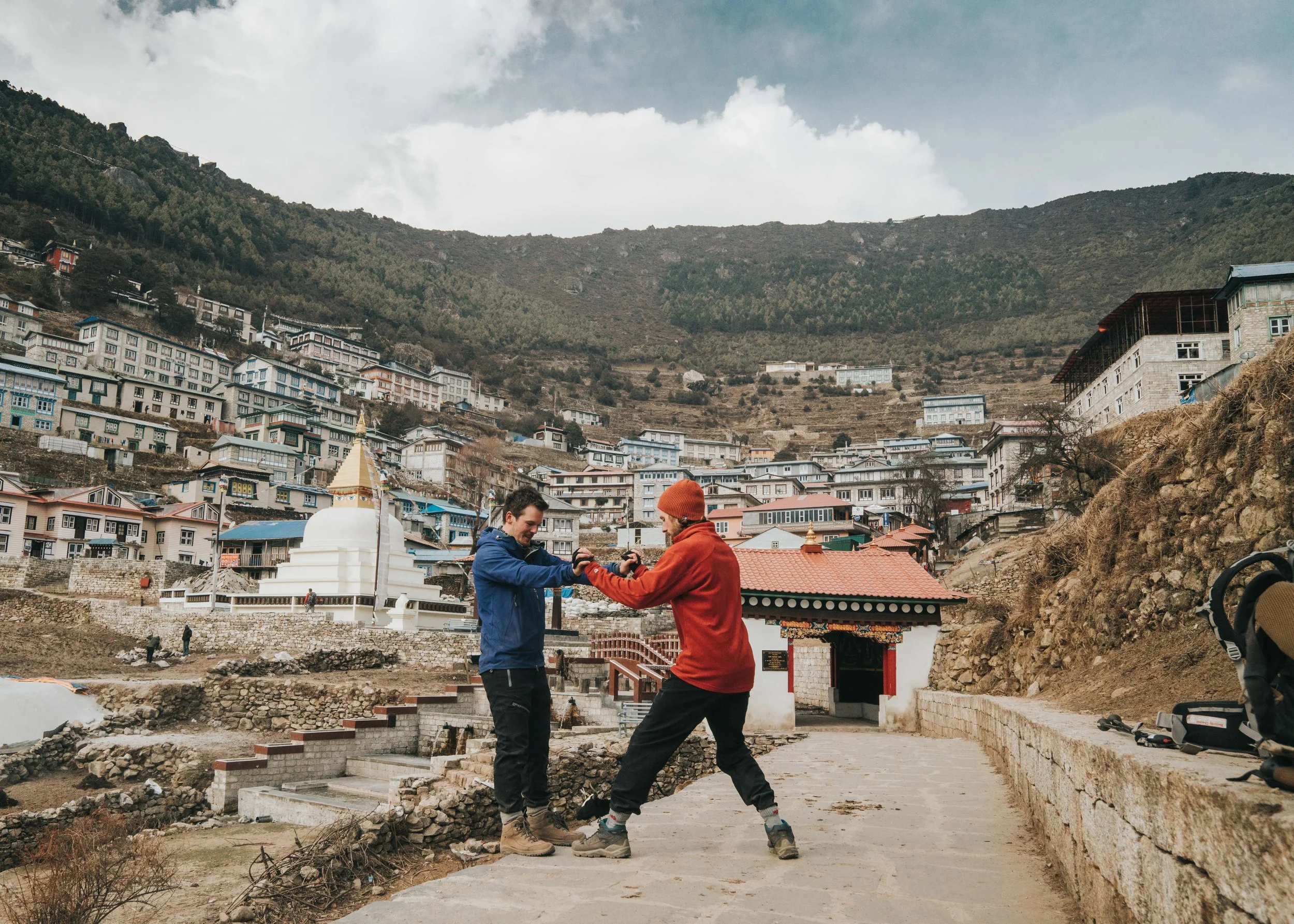
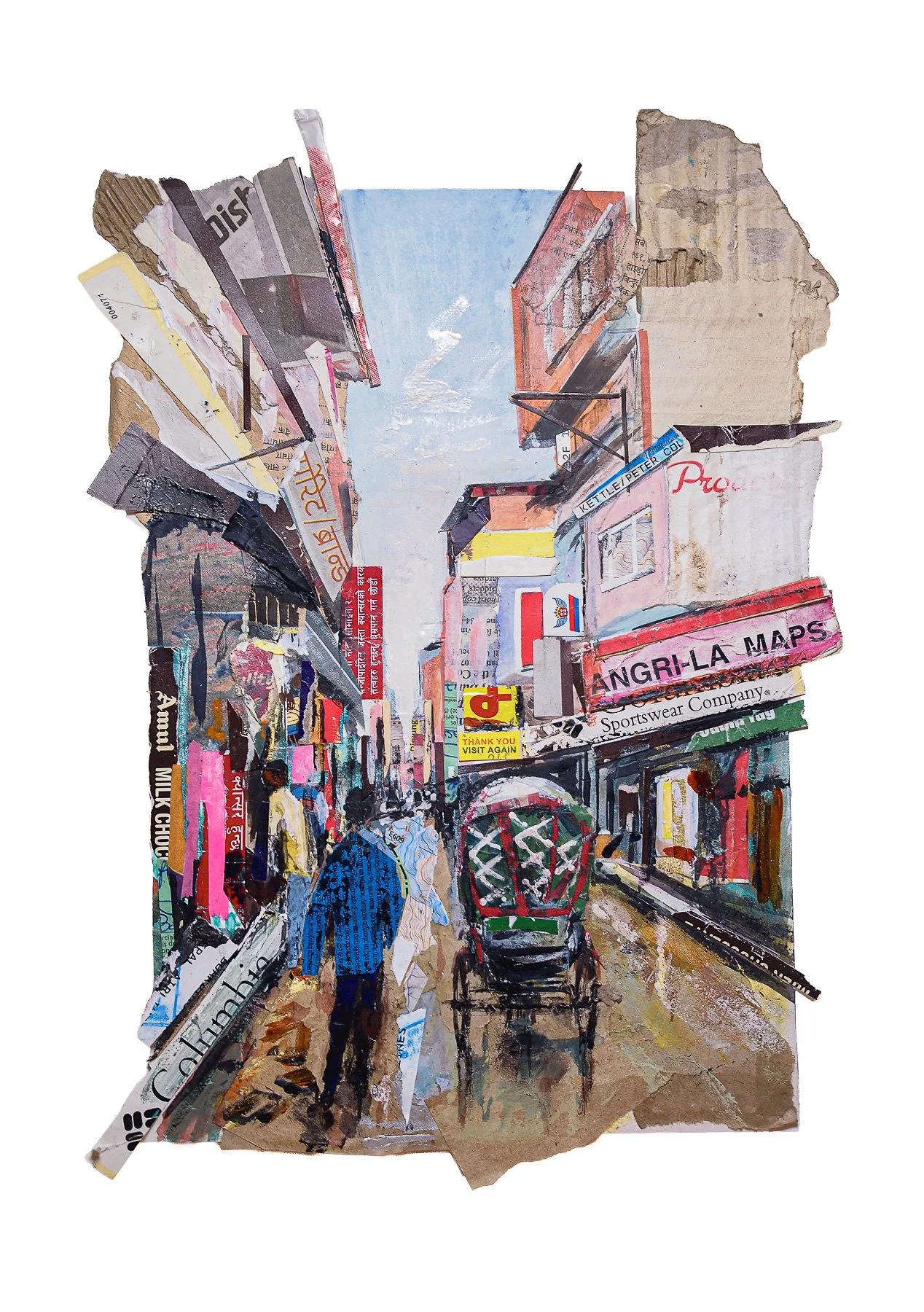
Arriving in Nepal felt like the real beginning of the expedition. We made our way into Thamel, where the streets seemed to contain everything required for an attempt on the Himalayas: trekking equipment, prayer flags, maps, cafés, climbing gear and travellers waiting for flights into the mountains.
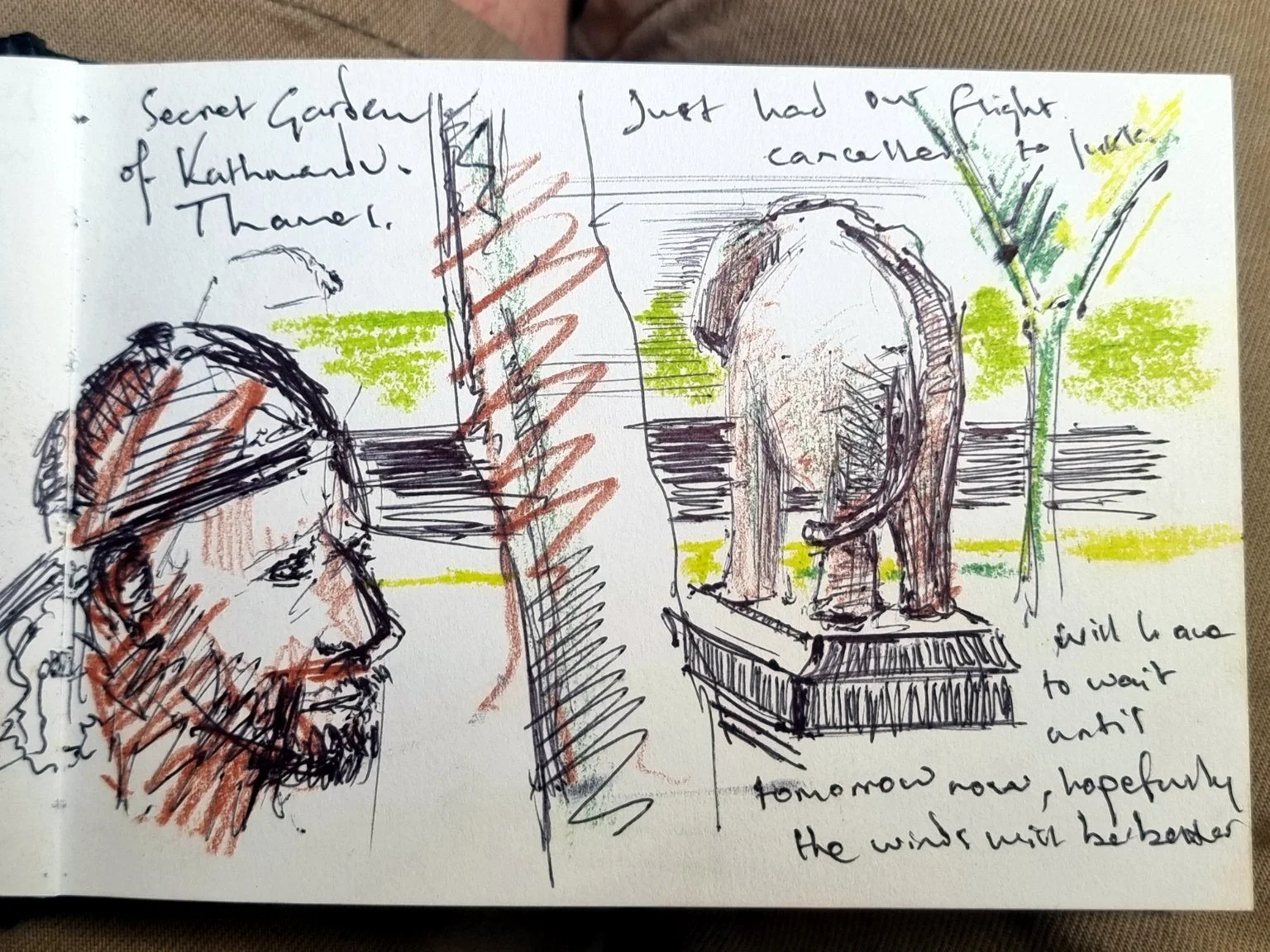
Our own flight to Lukla was promptly cancelled.
The weather around Lukla dictates almost everything. The small airstrip sits high in the mountains and flights operate only when conditions allow. There was little we could do but wait.
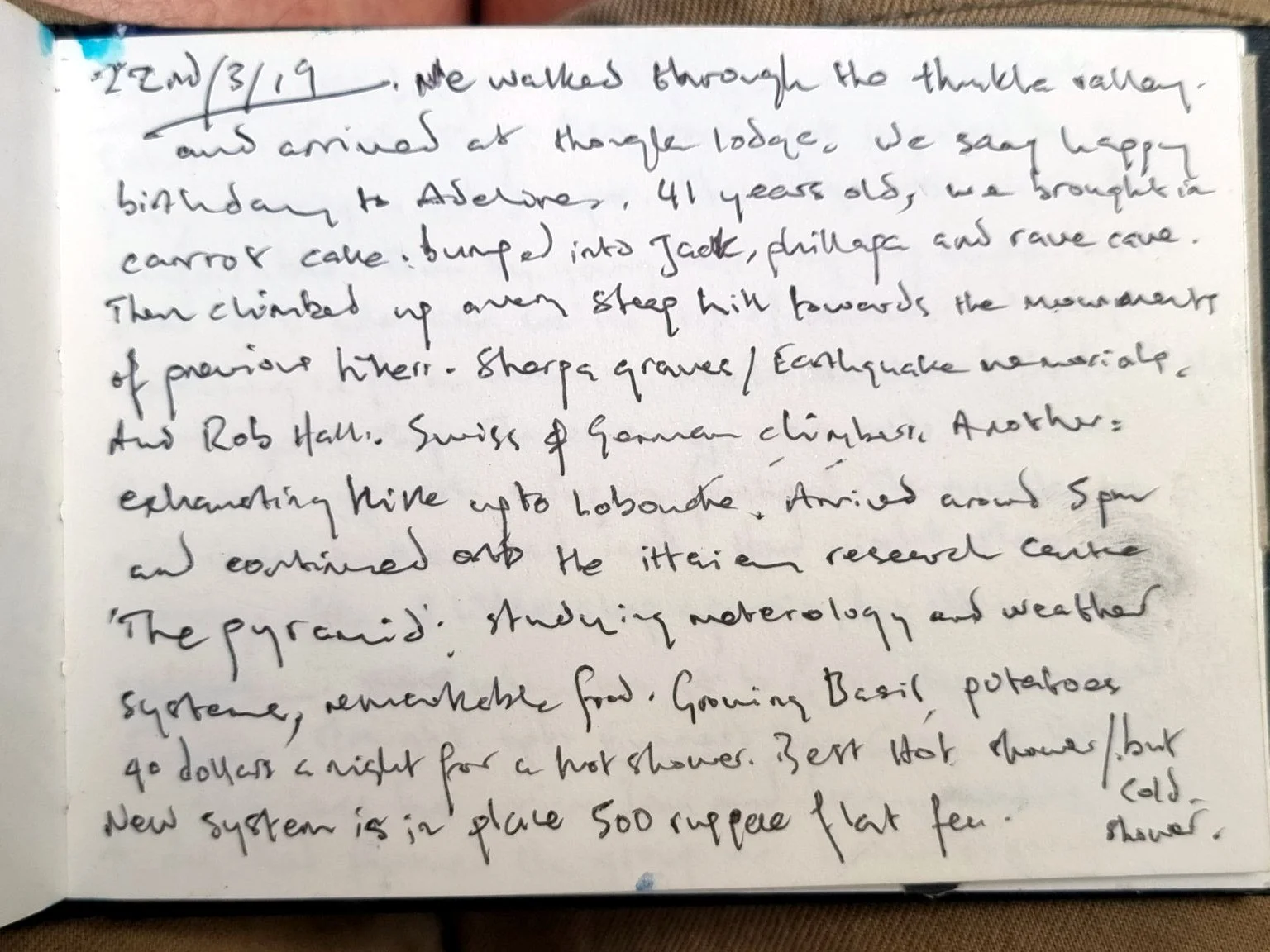
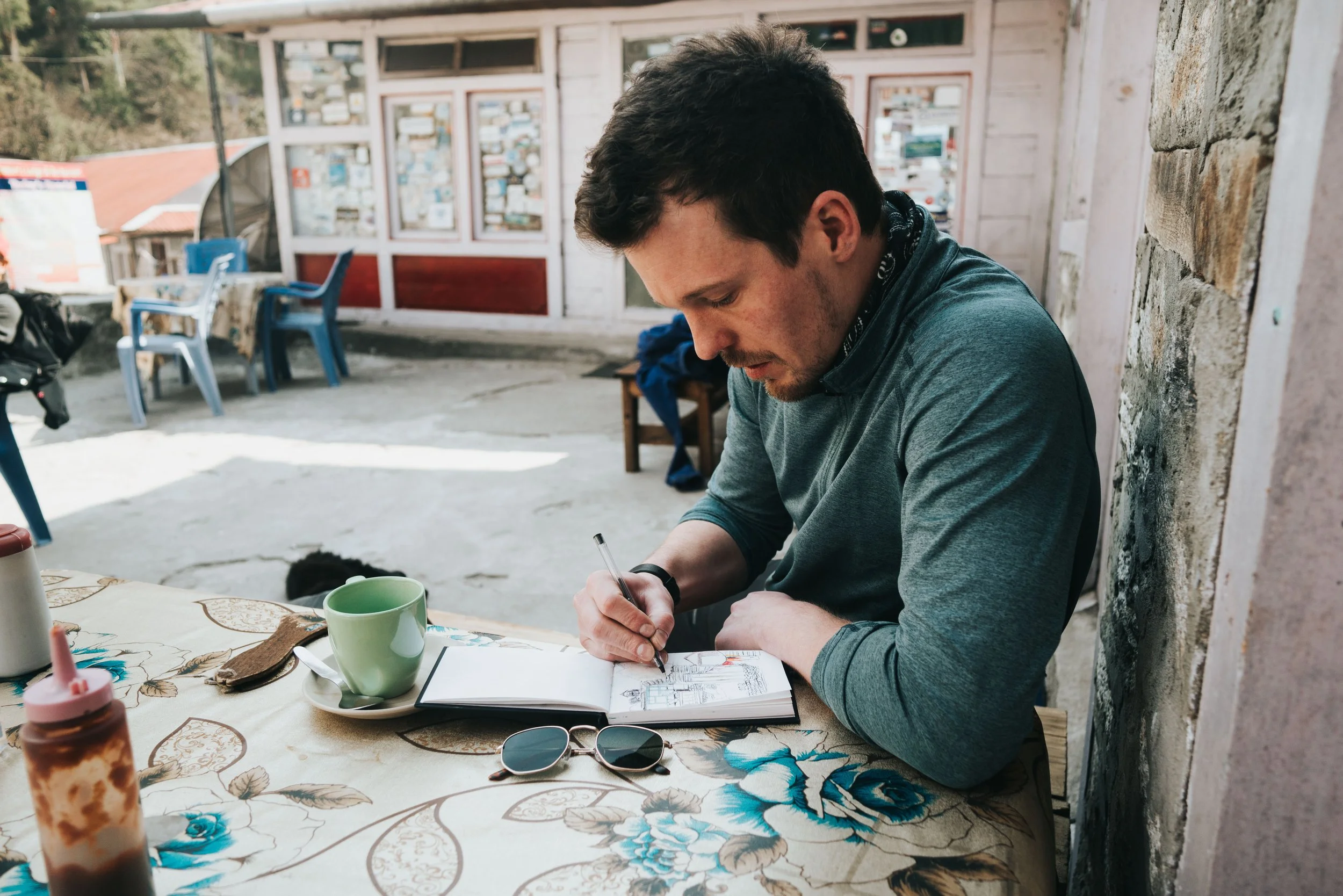
I spent the unexpected time drawing.
In my notebook, beneath a sketch made in Kathmandu, I wrote:
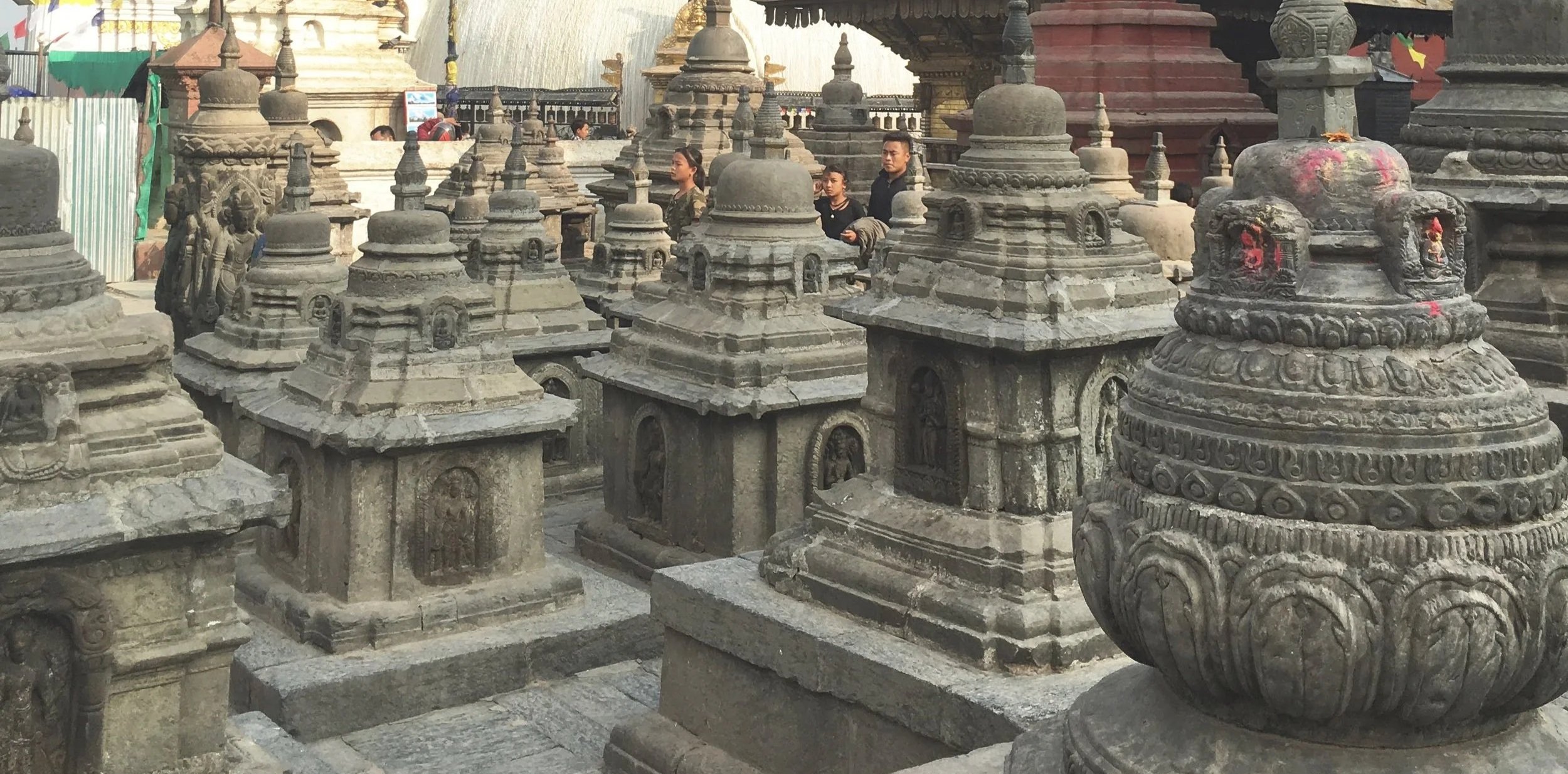
“Just had our flight cancelled to Lukla. Tomorrow now, hopefully. The winds will be better.”
Eventually, they were.
THE FLIGHT TO LUKLA
We left Kathmandu early the following morning.
The flight to Lukla is short, but the landscape changes dramatically beneath you. The Kathmandu Valley falls away and the foothills begin folding into one another, becoming progressively larger until the Himalayas appear beyond them.
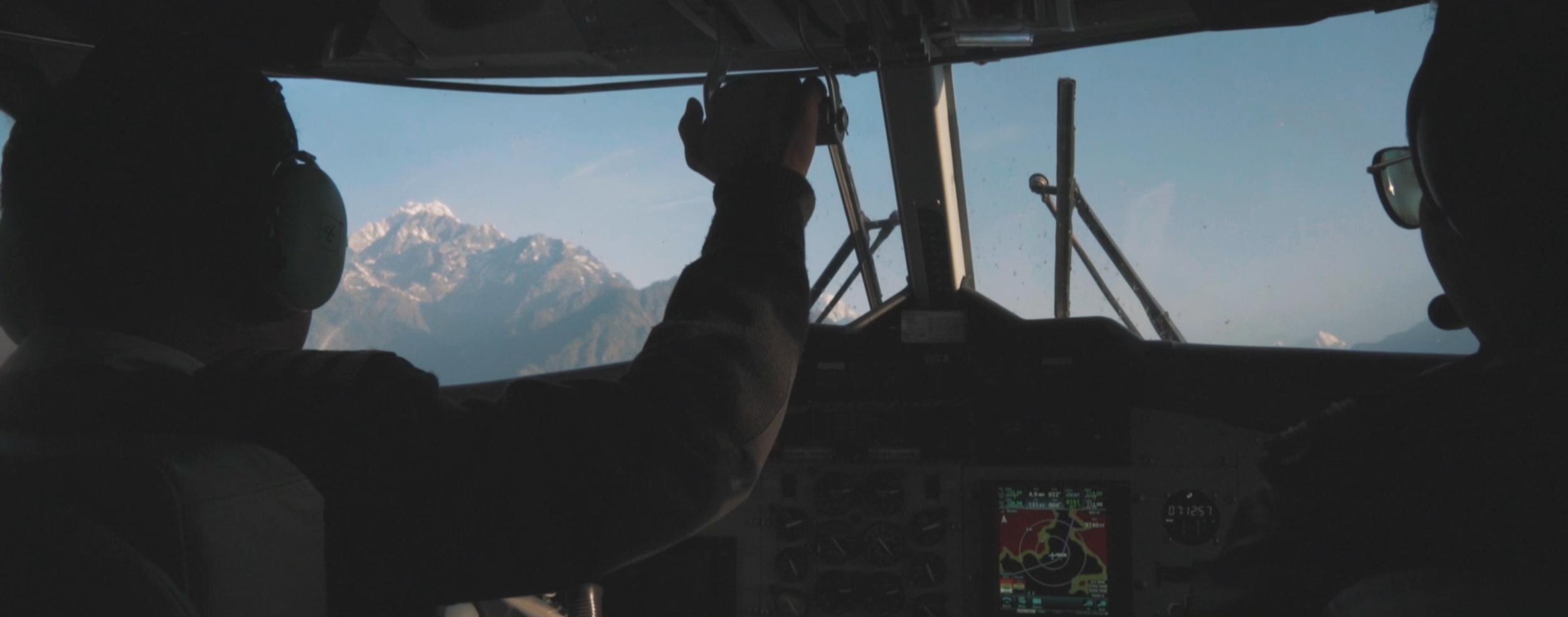
Landing at Lukla placed us immediately into a different rhythm.
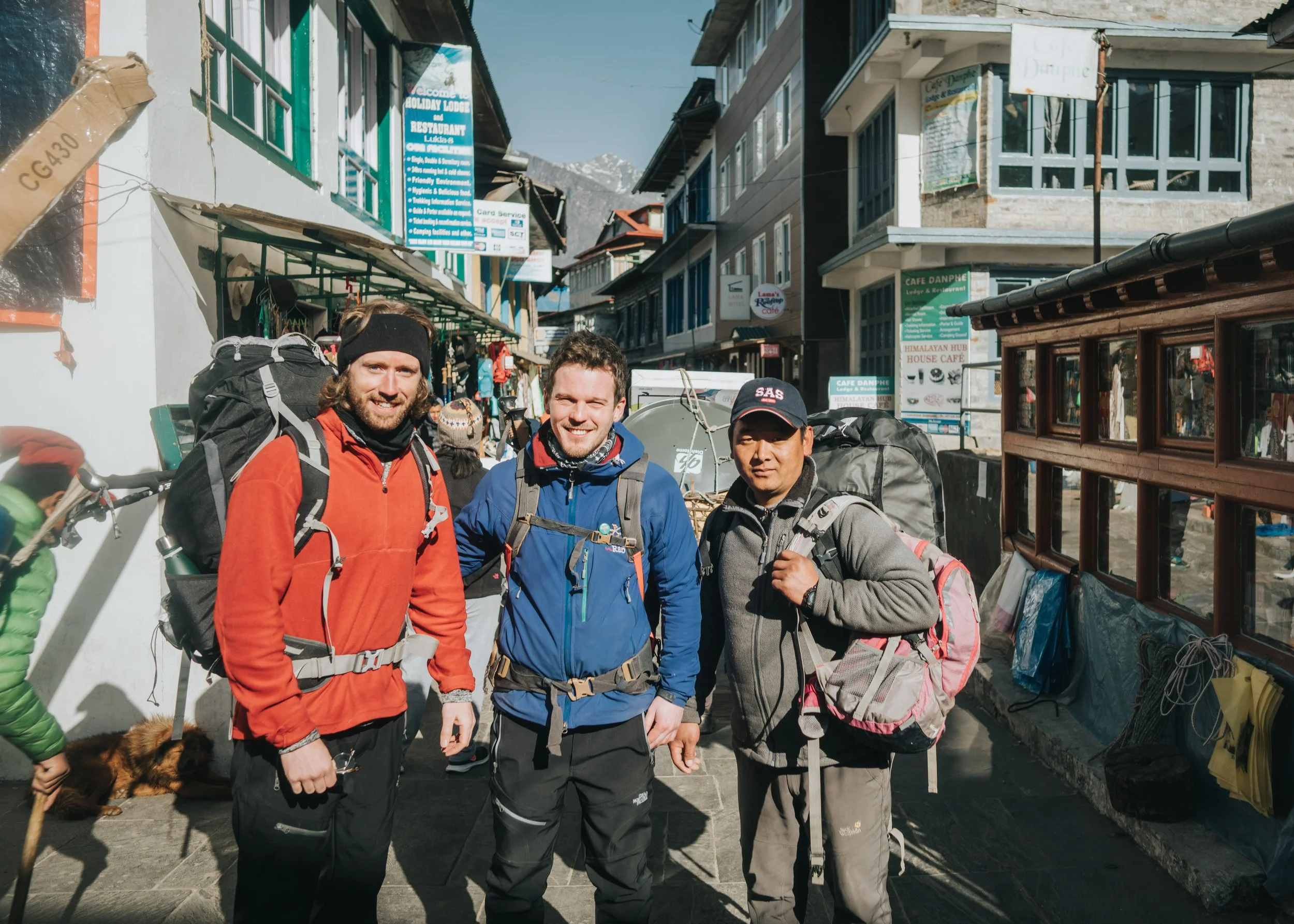
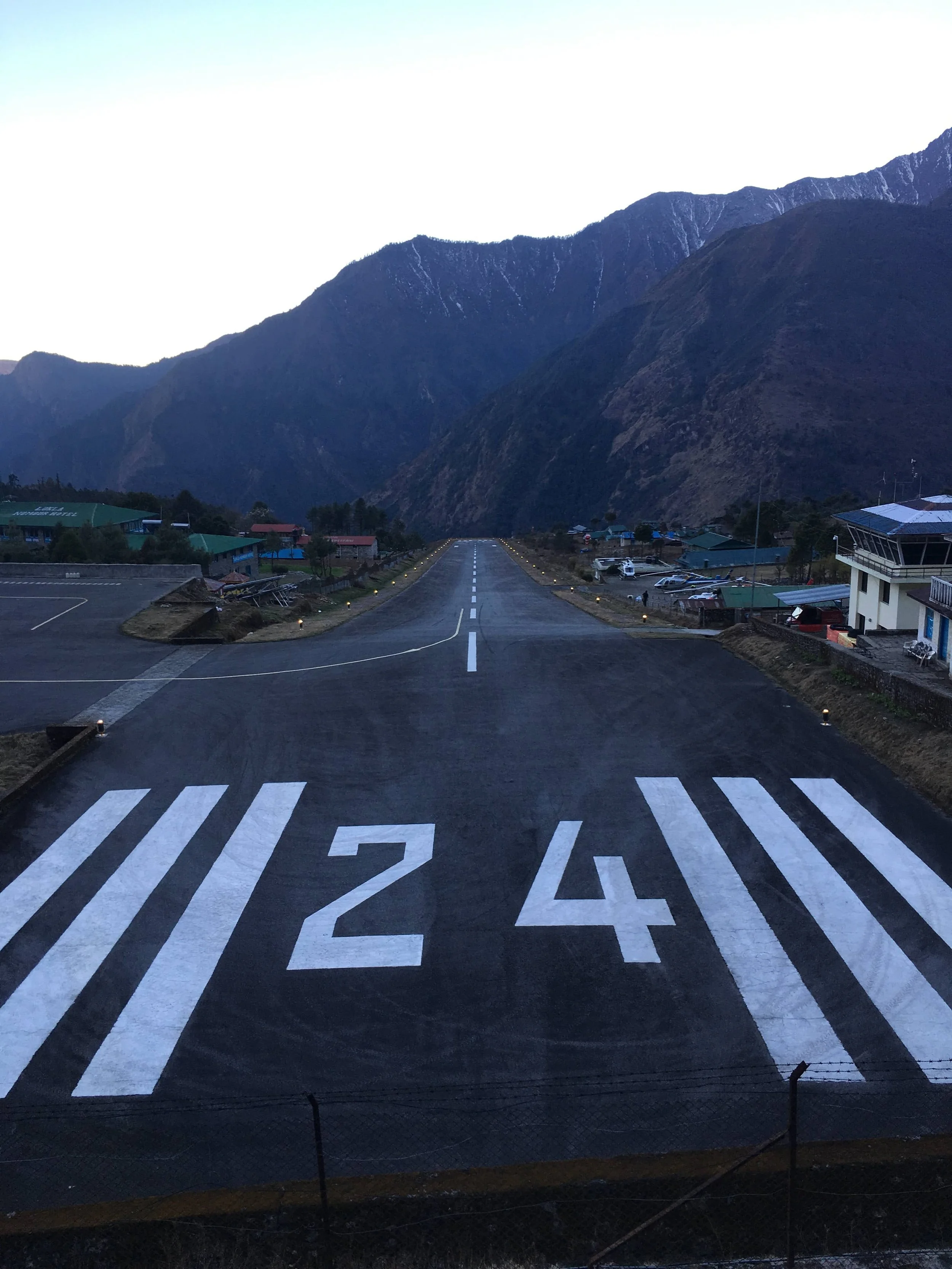
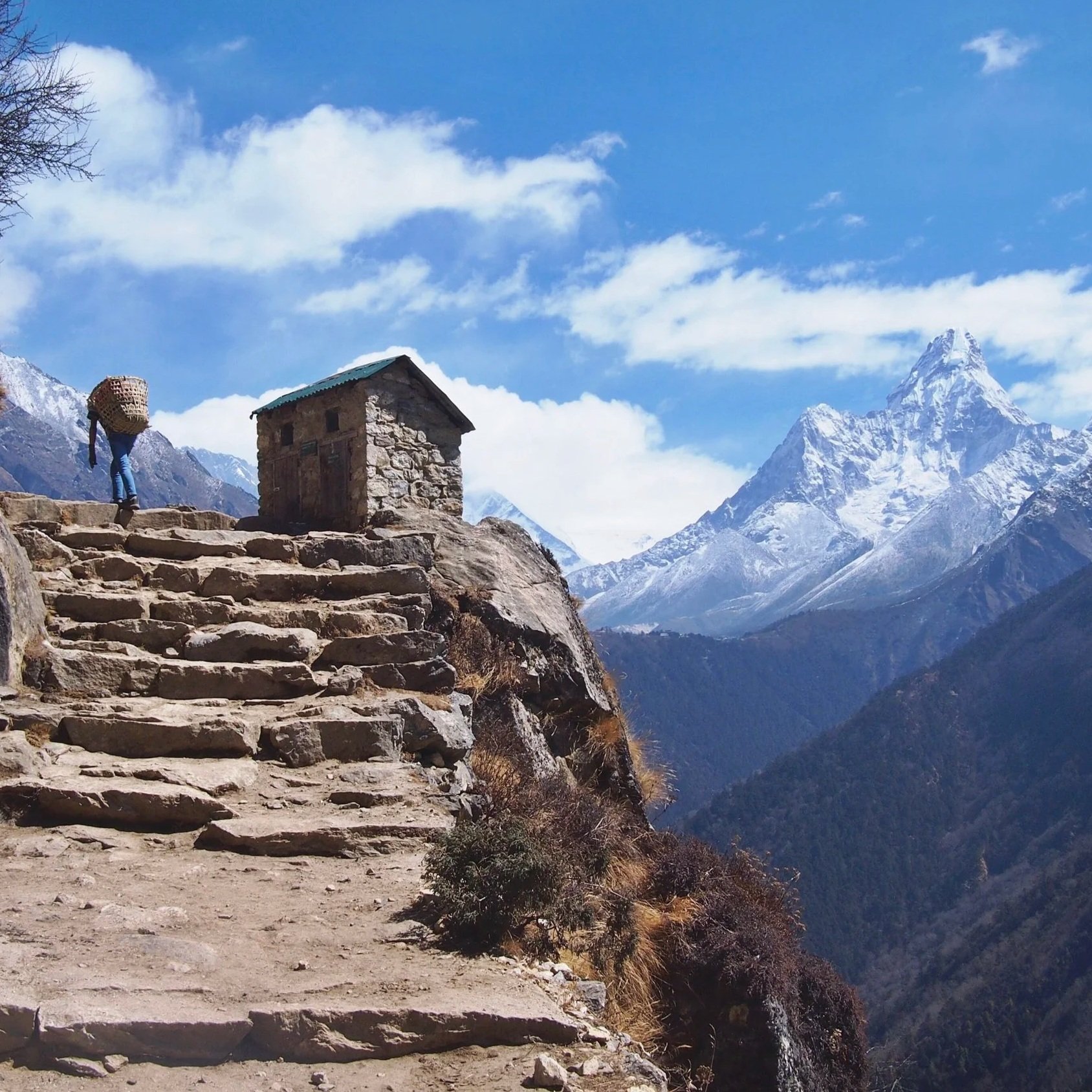
There are no roads carrying you onwards towards Everest. From here, everything moves along the trail: people, food, building materials, gas bottles and expedition equipment. Porters carry extraordinary loads on their backs while trains of yaks and mules move supplies between the villages.
We met our guide, Babu, and started walking.
INTO THE KHUMBU
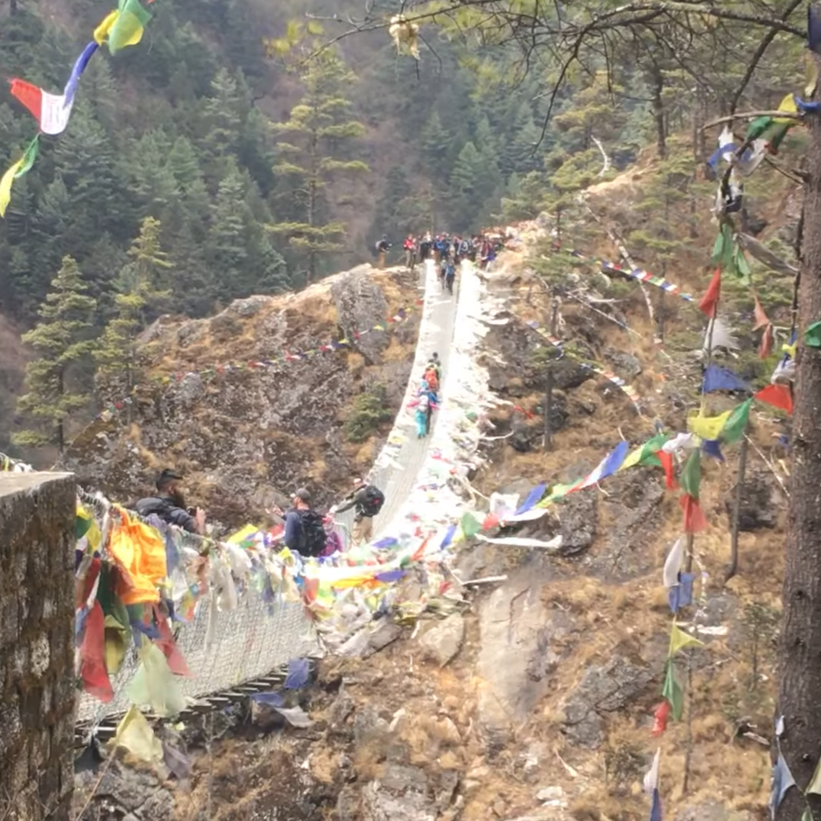
Our first day took us from Lukla towards Phakding. After the noise and movement of India and Kathmandu, walking felt wonderfully simple. The trail followed the Dudh Kosi through villages and forest, crossing the river on suspension bridges draped with prayer flags.
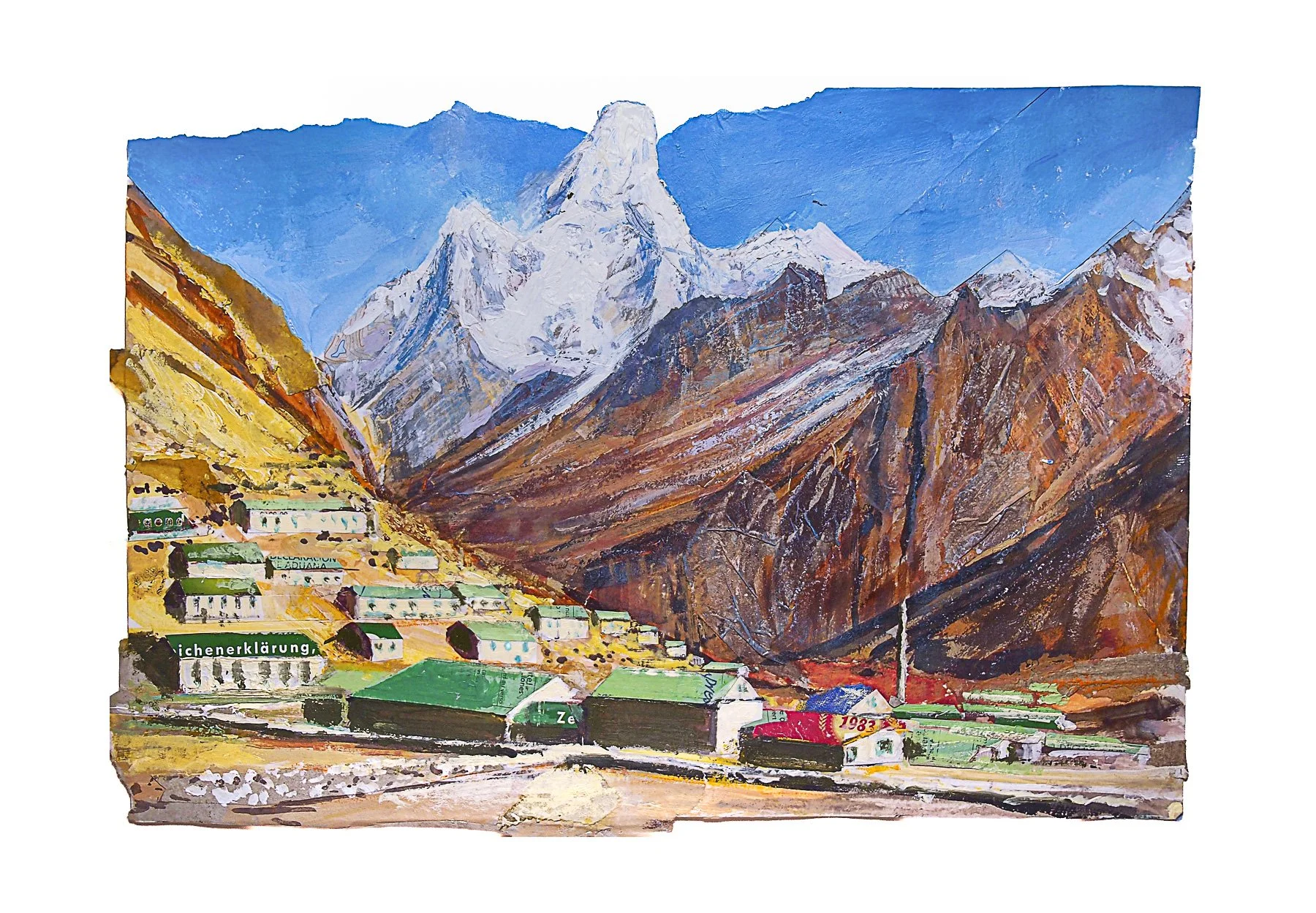
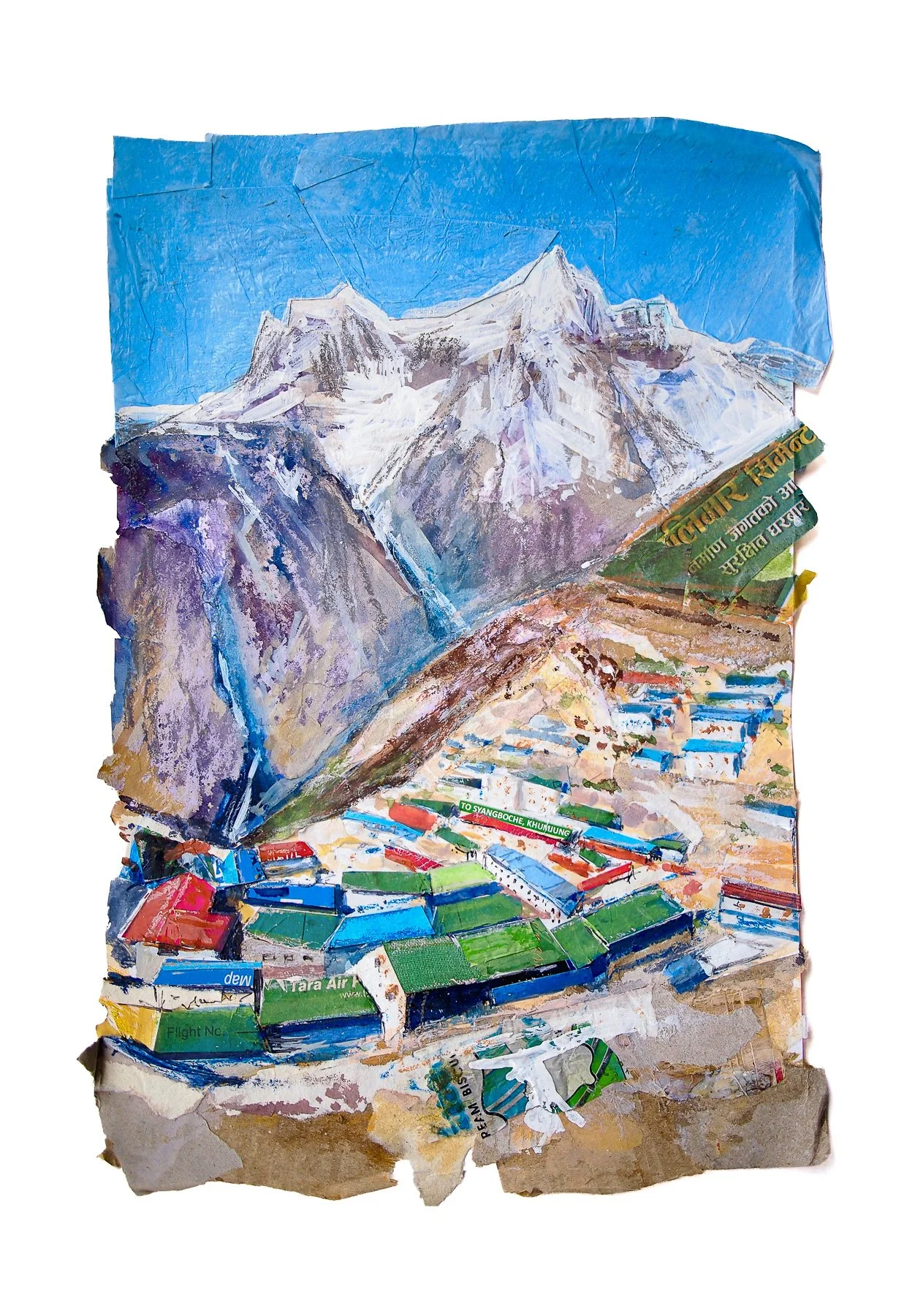
I had brought paints, sketchbooks and materials with me, intending to work throughout the journey rather than simply photograph it and paint once I returned home.
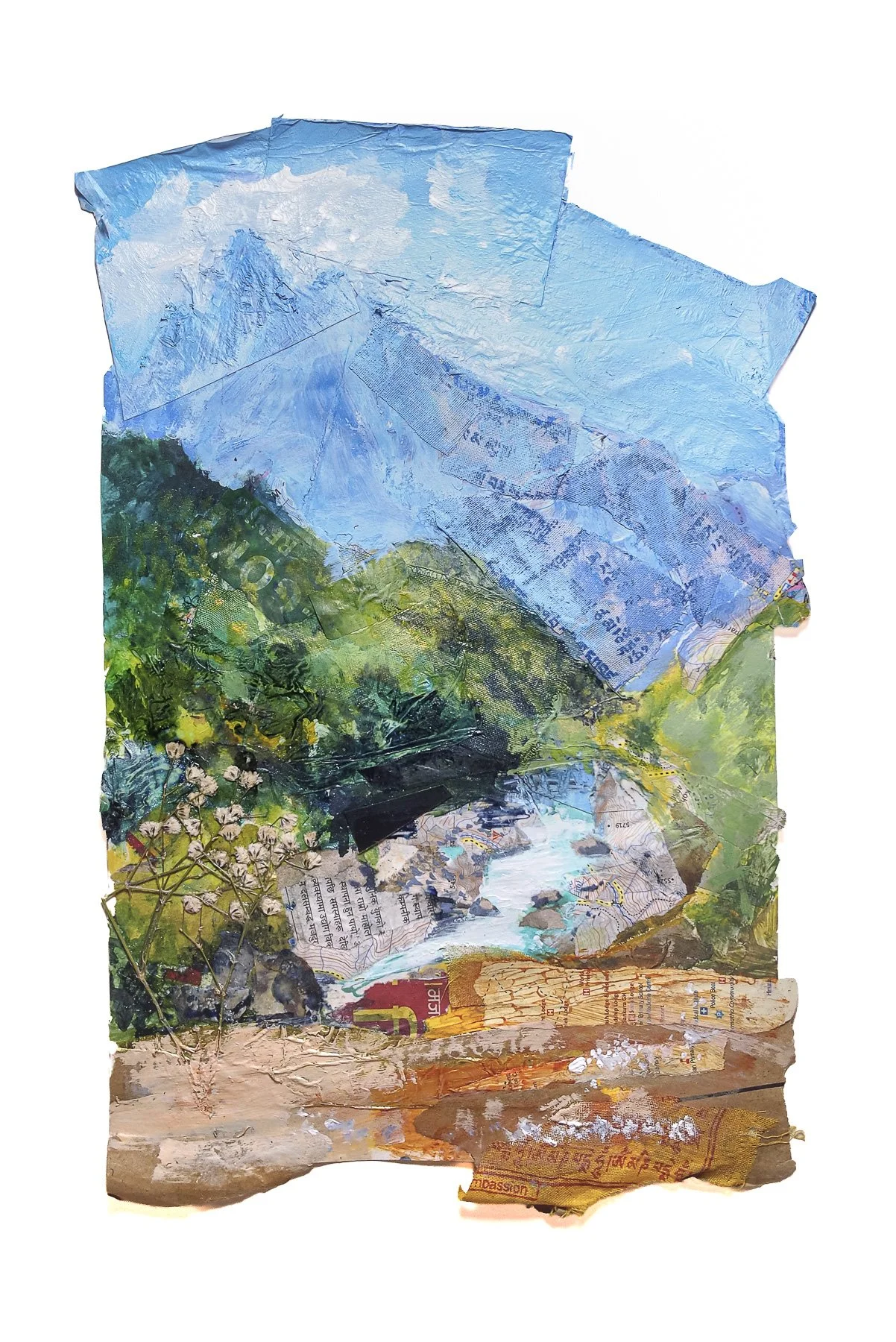
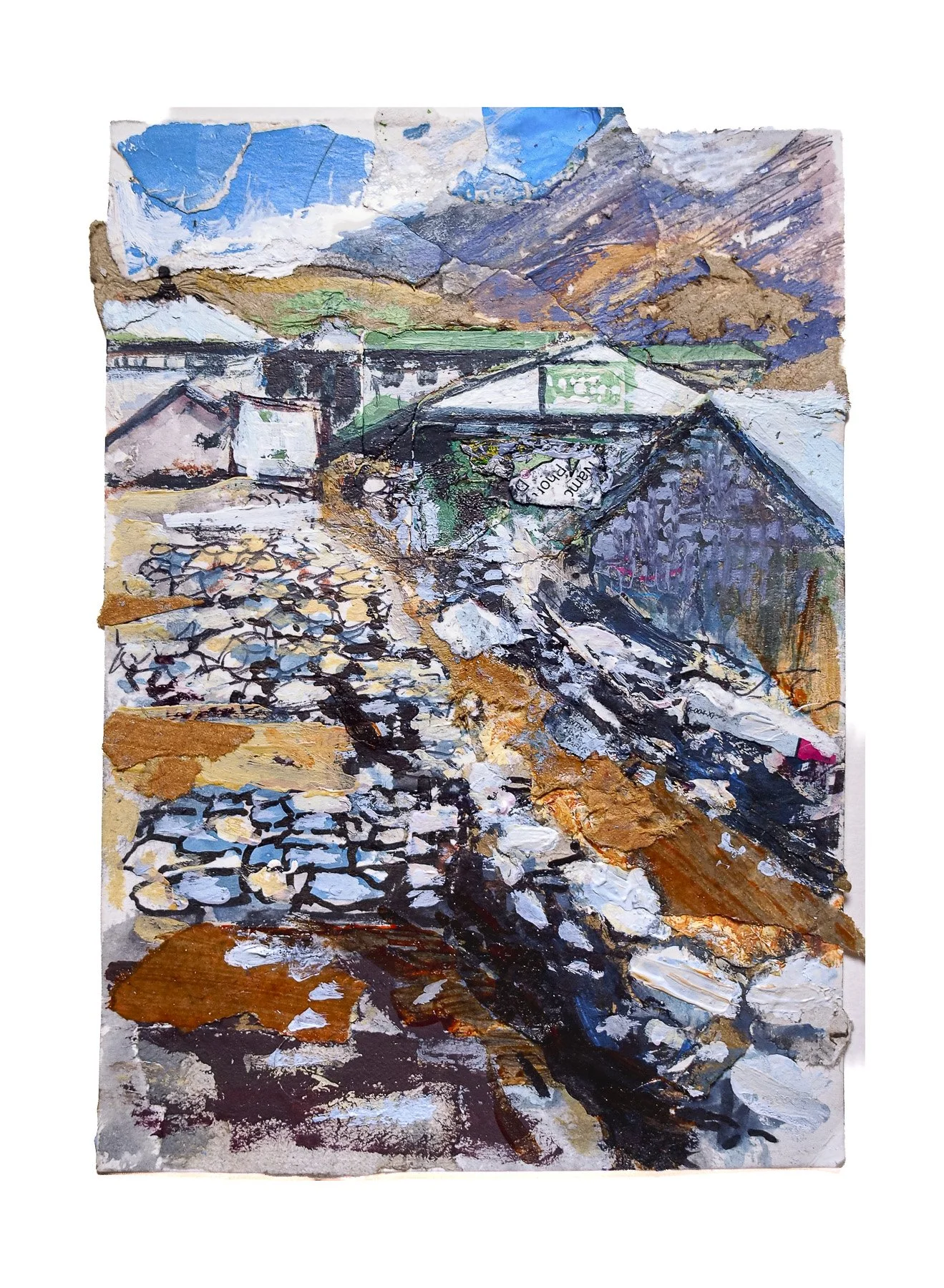
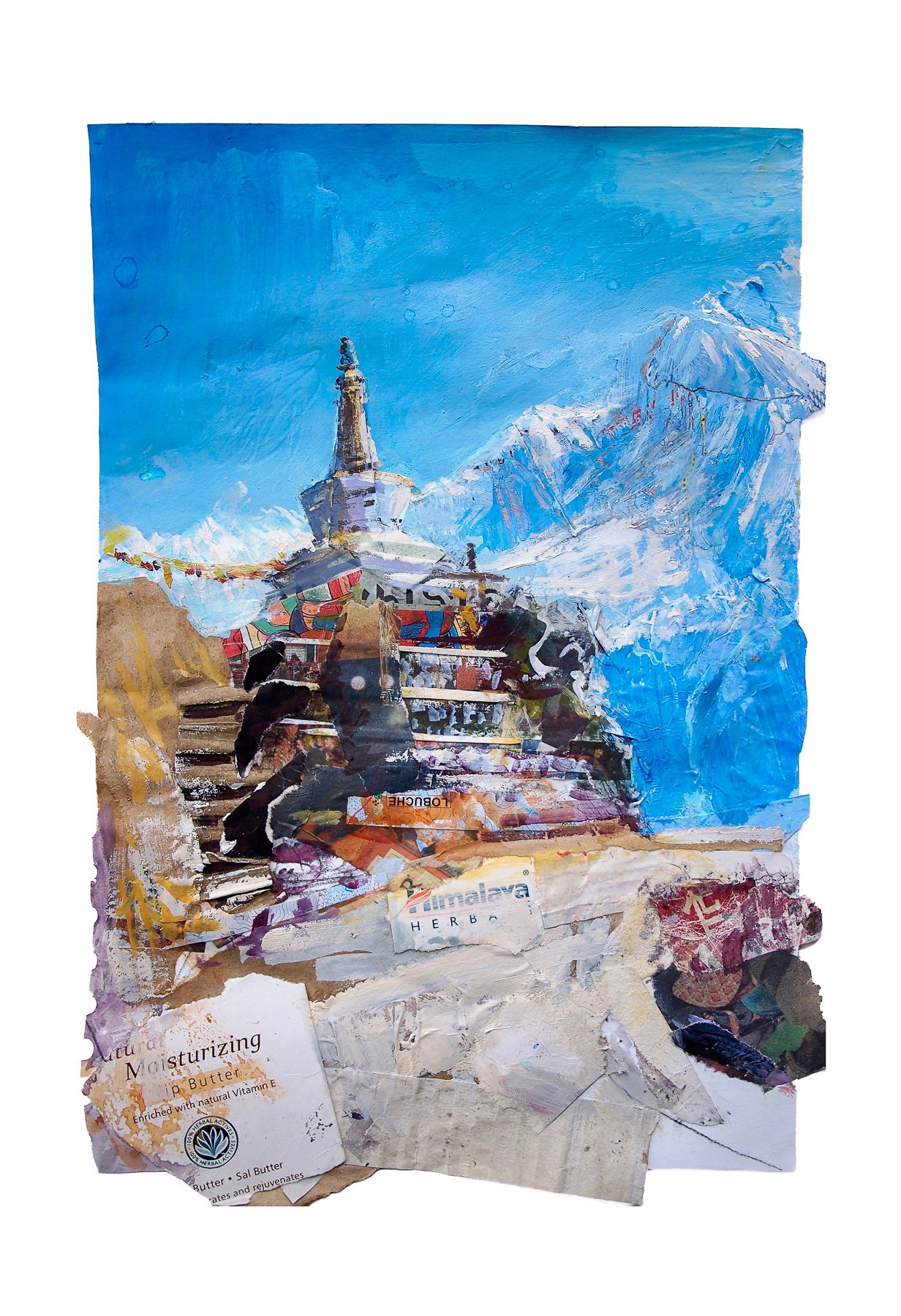
That meant accepting a certain amount of unpredictability.
Paintings would have to be made wherever there was time: outside lodges, beside trails, in bedrooms or balanced on whatever surface happened to be available. They would then need to be carried, sometimes still wet, further into the mountains.
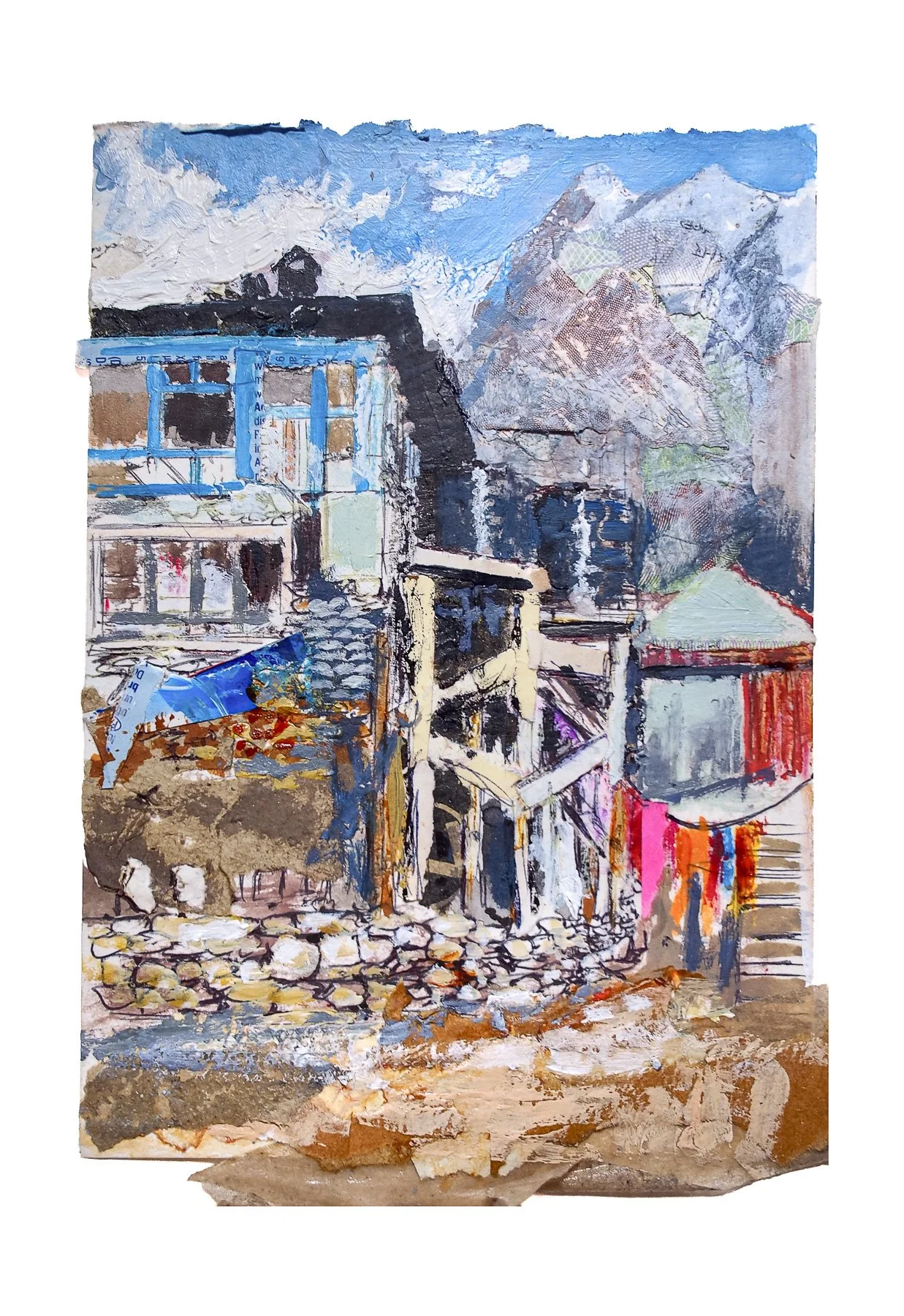
At Phakding we stopped for the first night.
Dal bhat, yaks and the first real feeling of being on the trail.
Ahead of us was Namche Bazaar, Tengboche, Dingboche and the increasingly thin air of the upper Khumbu. Beyond them lay the Khumbu Glacier and Everest Base Camp.
For now, though, Everest remained somewhere out of sight.
We had begun walking towards it.