HOKKAIDO: MOUNT YOTEI & AINU CULTURE
Painting beneath one of Hokkaido’s most distinctive mountains and learning how Ainu culture offers a different way of understanding our relationship with landscape.
2023 · FIELD NOTES FROM THE ROAD
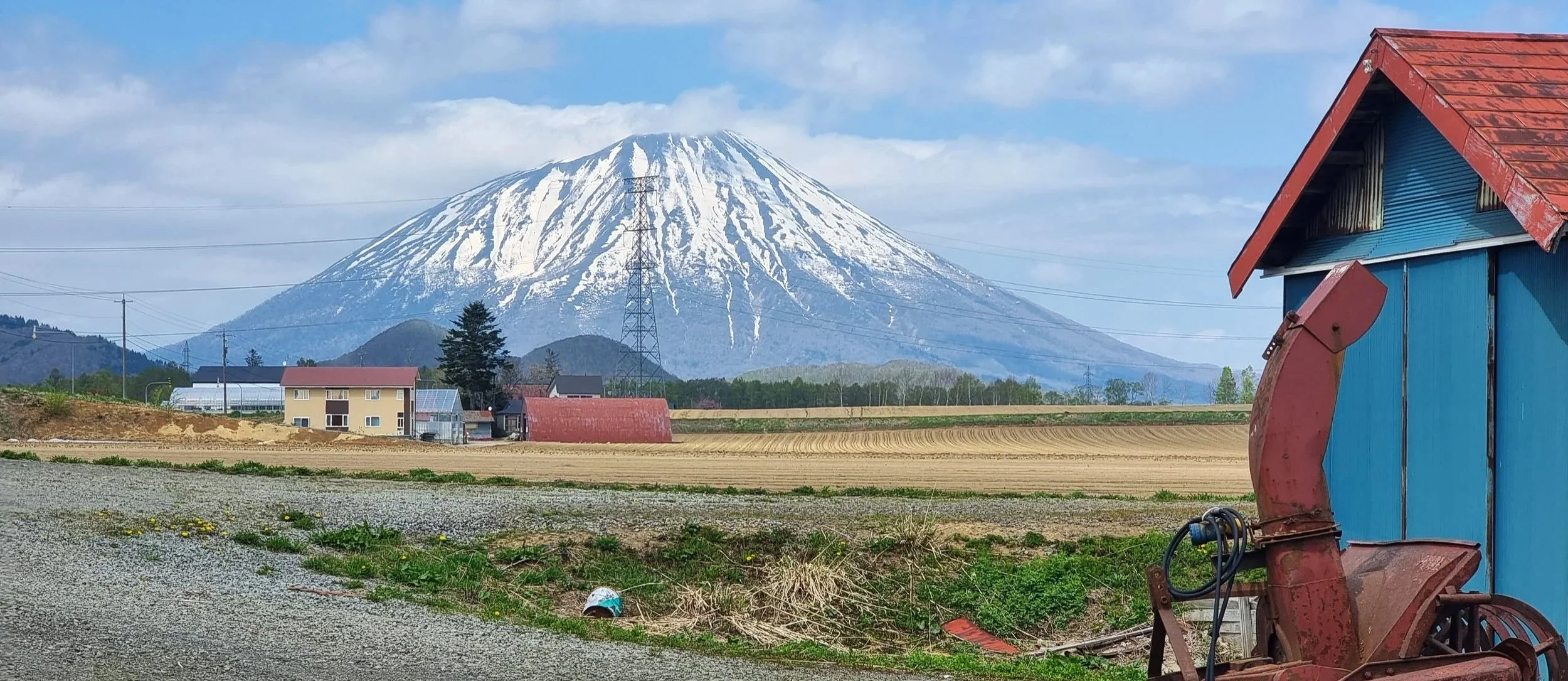
Mount Yotei rises almost unexpectedly from the landscape of southern Hokkaido. At 1,898 metres, its near-symmetrical volcanic form has led to its Japanese nickname Ezo Fuji — the Fuji of Hokkaido.
I travelled here as part of a journey through Japan to paint landscapes that hold a particular cultural or spiritual significance. What interested me wasn’t simply the mountain itself, but the different ways in which a landscape can be understood by the people who have lived alongside it.
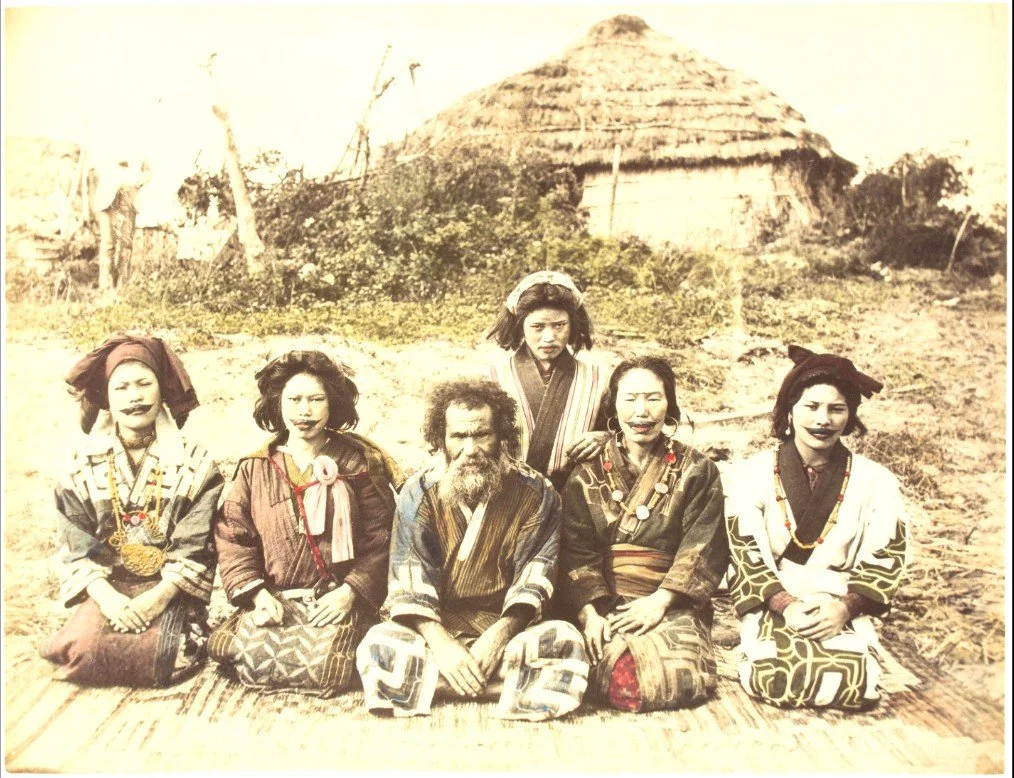
Ainu people in Hokkaido, 1890
A DEEPER HISTORY
The Ainu offer a window into a much older history of the Japanese archipelago. They retain particularly strong ancestry from the Jomon, hunter-gatherer communities who lived across these islands thousands of years before later migrations from continental Asia helped shape modern mainland Japan. Their influence can be traced through food too. Kombu gathered from the cold waters around Hokkaido travelled south through centuries of trade, eventually becoming fundamental to dashi and the umami flavours now synonymous with Japanese cooking. Ainu traditions of hunting, fishing and gathering also survived alongside a spiritual culture in which animals, plants and the landscape were understood as deeply animate.
MAKKARINUPURI
Long before Mount Yotei acquired the nickname Ezo Fuji - the Fuji of Hokkaido - the mountain existed within a very different understanding of the landscape.
In one Ainu creation legend recorded by the Hokkaido poet and folklorist Genzo Sarashina (更科源蔵), the world begins as a dark expanse of sea. From it, rock rises and forms a mountain, onto which a creator deity descends. A female deity follows from the heavens, carried on five-coloured clouds, and together they use those colours to form rock, earth, plants, animals and the materials beneath the ground. Their children become associated with the sun and moon, bringing day and night to the world. The mountain where the creator first descended is identified as what we now call Mount Yotei.
Yotei itself was also known as Matneshiri - the “female mountain” - paired with nearby Shiribetsu-dake, Pinneshiri, the “male mountain”. The two mountains were understood in relation to one another rather than as isolated landmarks.
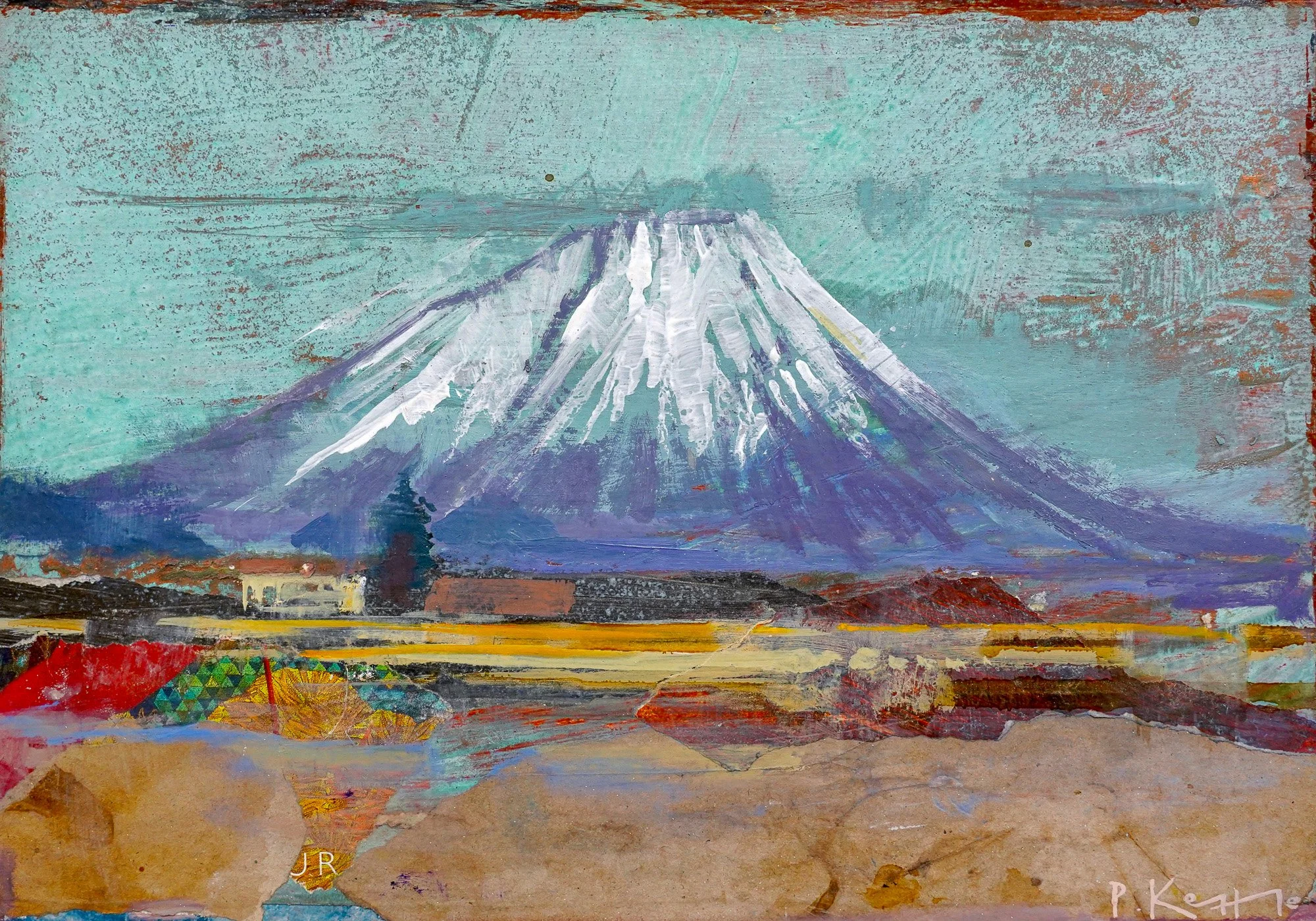
Mt. Yotei - 35 x 20 cm - Oil and collage on canvas
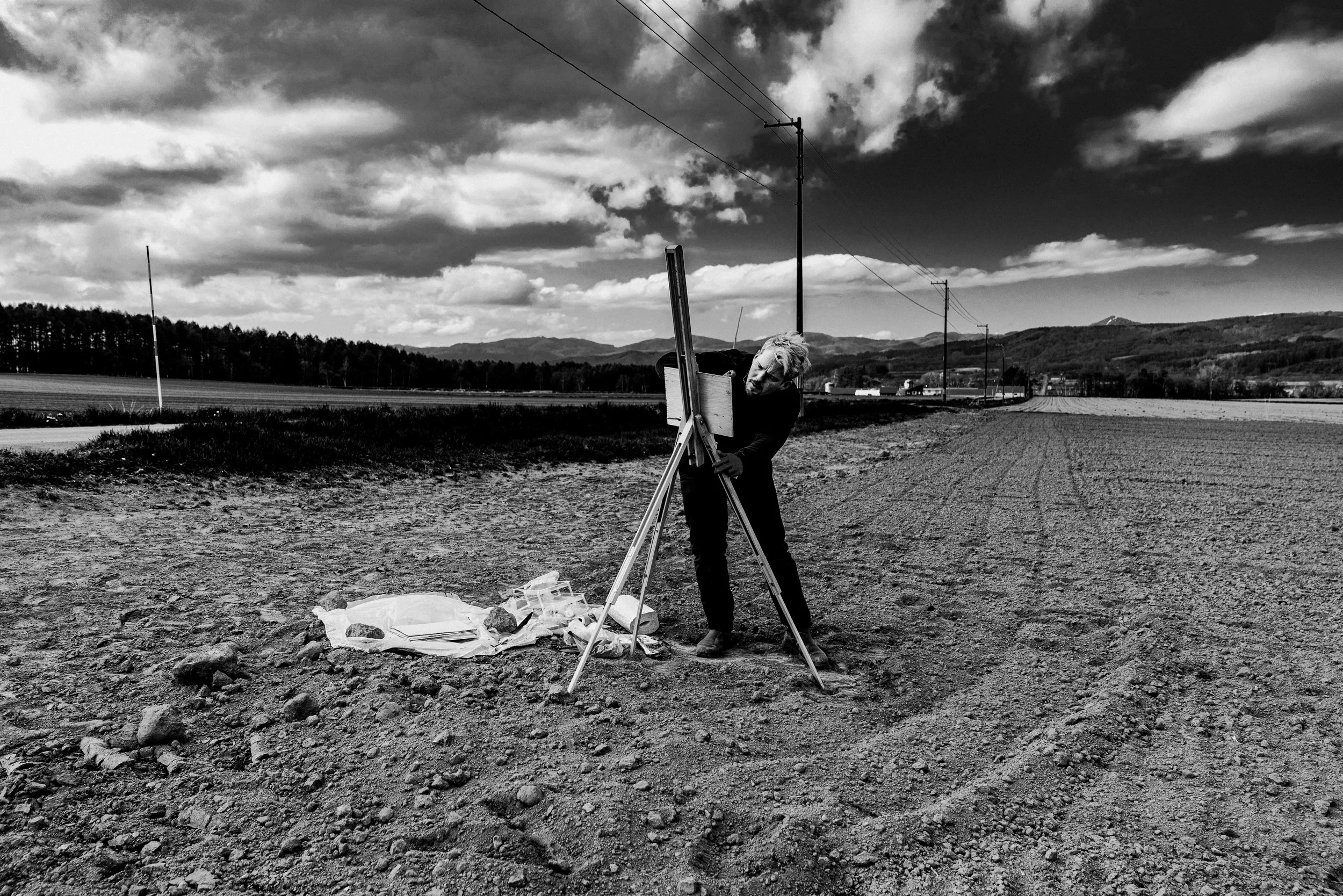
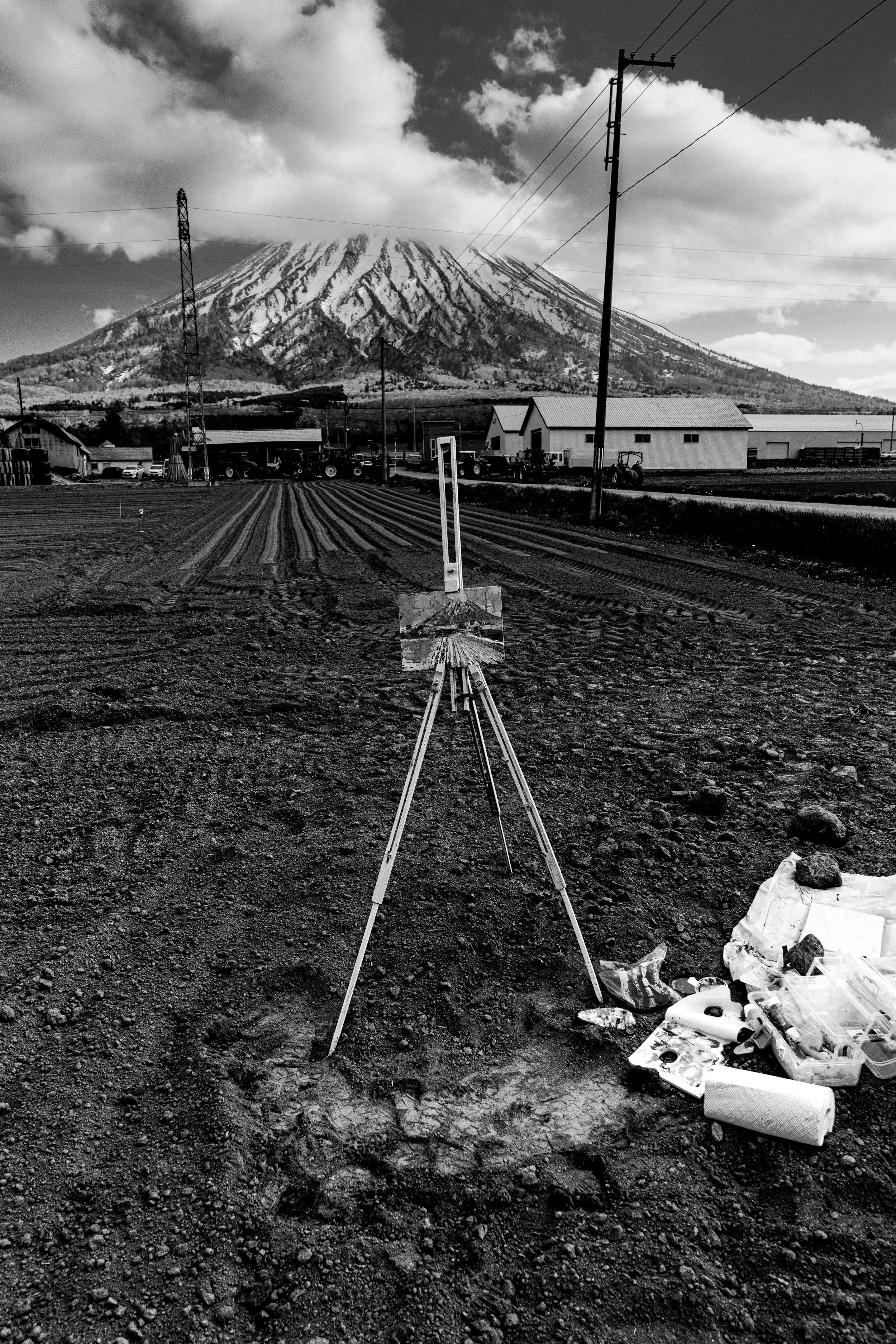
I found this idea particularly affecting while painting beneath Yotei. I had travelled there initially because of the extraordinary physical presence of the mountain, but learning something of the stories attached to it changed the way I looked at the landscape. The mountain was no longer simply something to paint. It was a place onto which generations had projected ideas of origin and belonging.
With the canvas spread across the ground beneath it, I became less interested in making a literal image of Yotei than in recording something of what it felt like to be there.
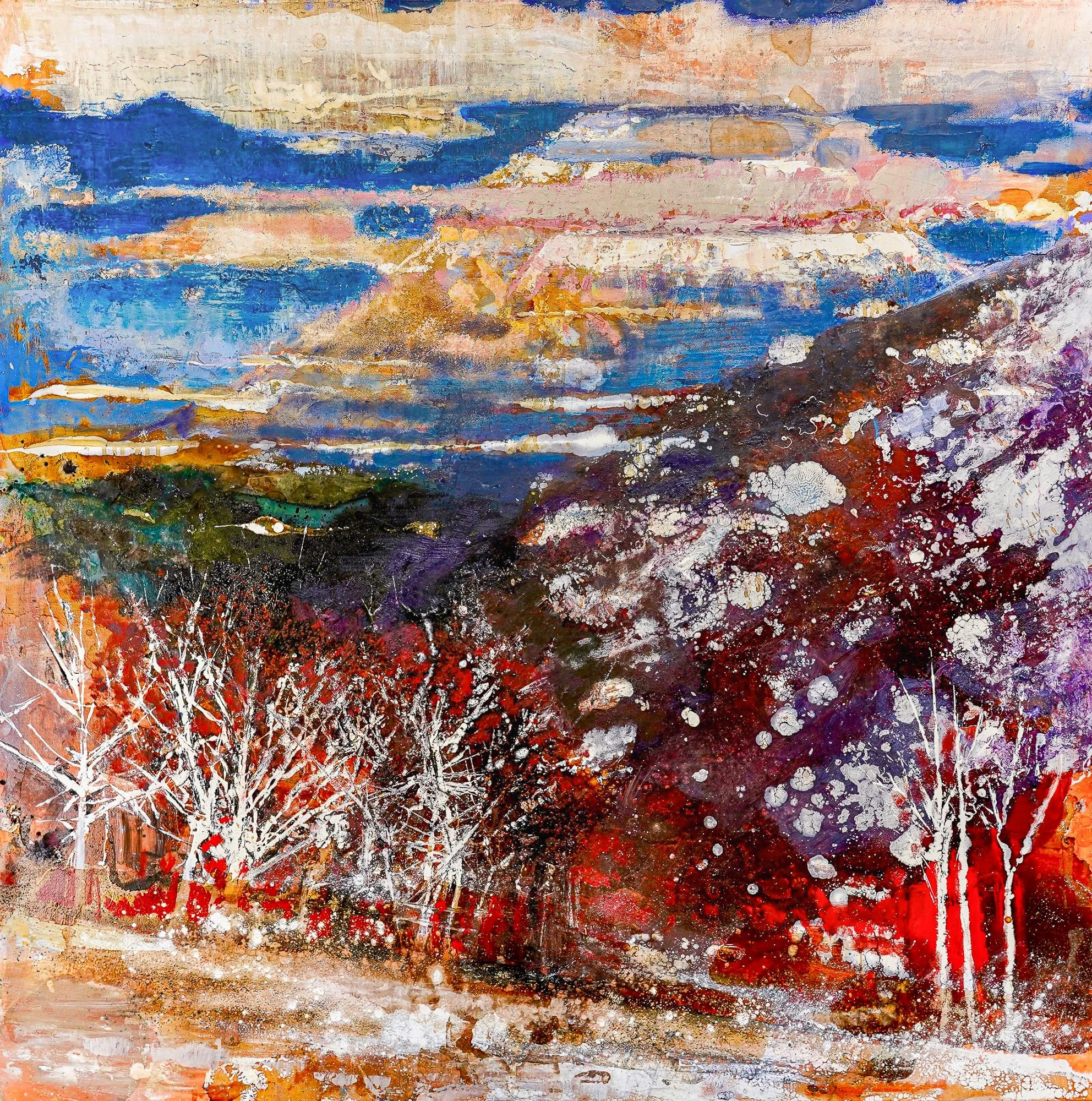
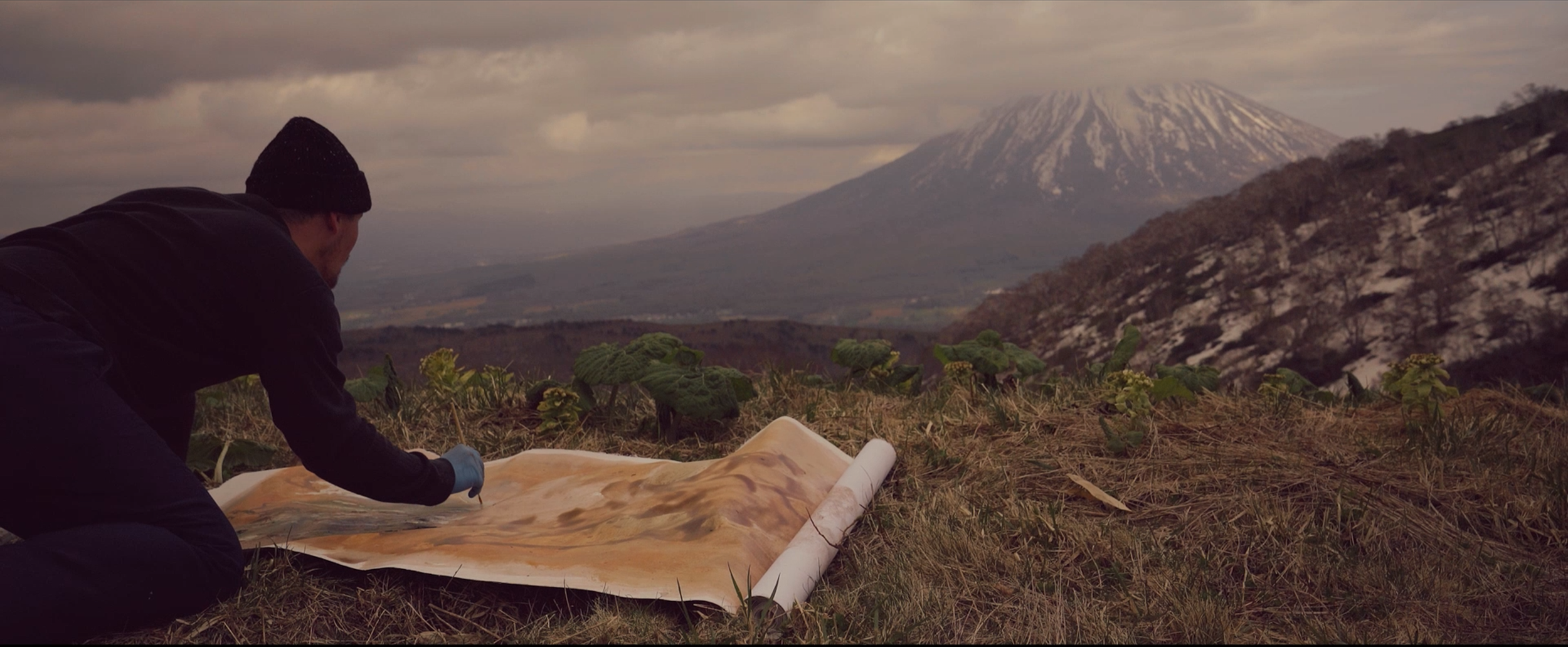
Painting Mount Yotei, Hokkaido, 2023.
AINU CULTURE & GOLDEN KAMUY
Ainu culture has also found a new audience through Golden Kamuy, Satoru Noda’s manga set in early twentieth-century Hokkaido.
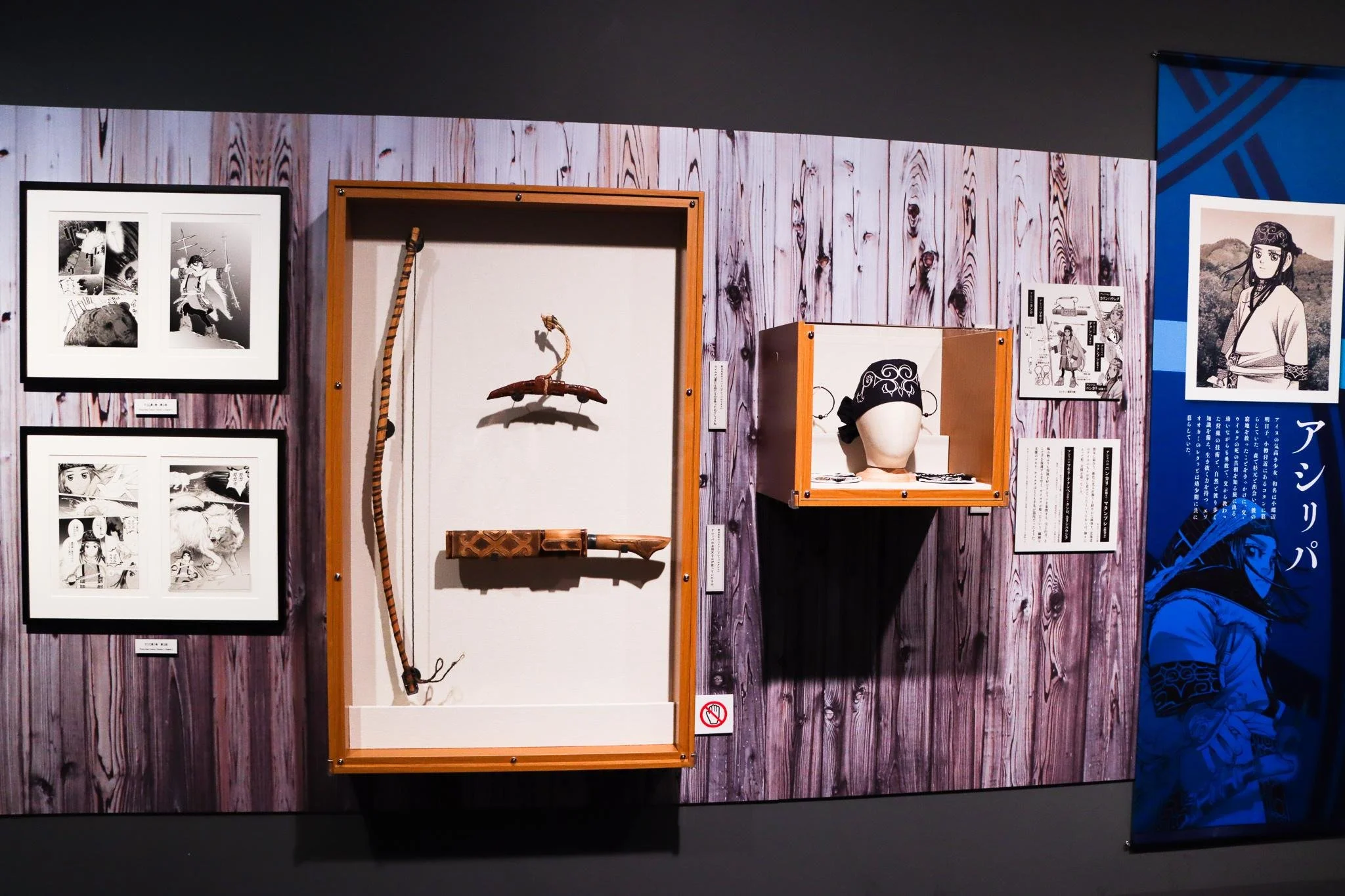
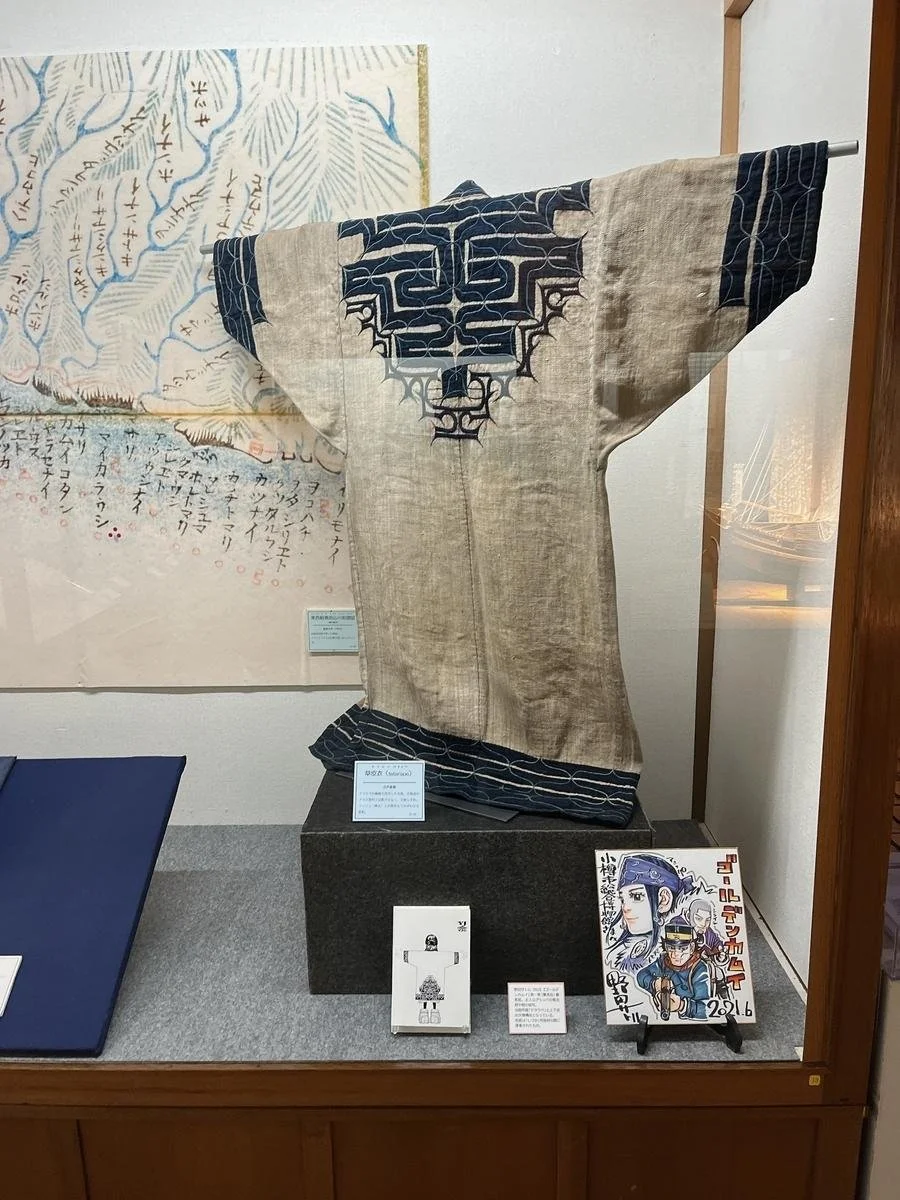
The series draws on Ainu food, clothing, language and traditions, introducing these aspects of the culture to a huge contemporary audience in Japan and beyond.
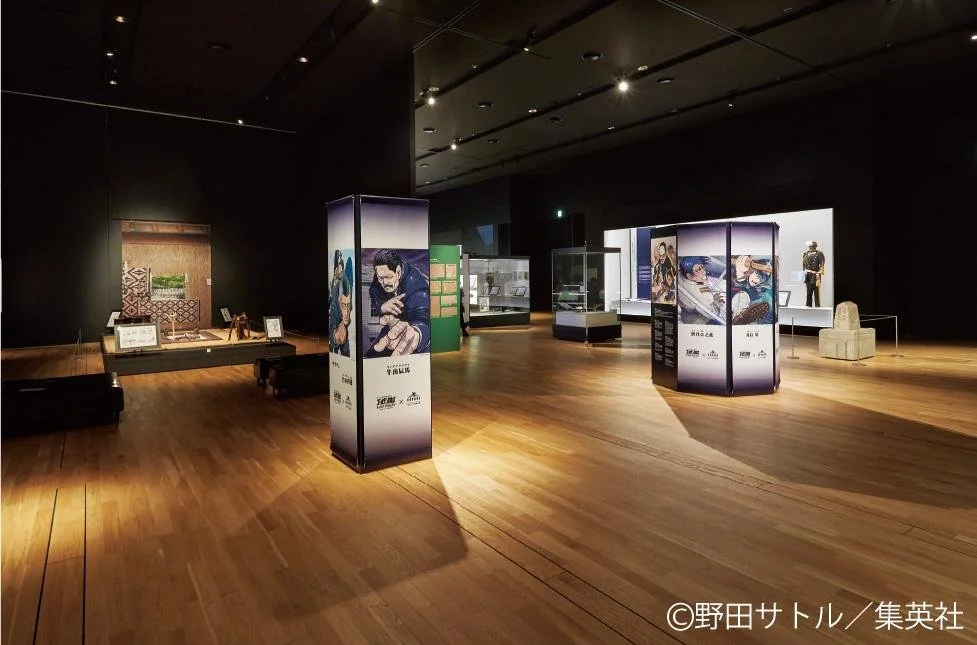
Its influence has extended beyond manga, with the National Ainu Museum exhibiting Golden Kamuy artwork alongside historic Ainu objects and cultural material.