HIGHER GROUND
Namche, Tengboche & Dingboche
March 16–22, 2019
NAMCHE
From Phakding the trail began to climb properly into the Khumbu.
We followed the Dudh Kosi north, crossing the river on suspension bridges high above the valley. Porters passed carrying extraordinary loads, alongside trains of yaks and mules moving food, gas bottles and building materials between the villages.
The final climb into Namche Bazaar was steep. At around 3,440 metres, it was our first real introduction to altitude and somewhere we could stop long enough for me to paint.
I had carried a small panel and materials from Lukla, intending to make work throughout the journey rather than simply photograph it and paint once home.
This occasionally created problems.
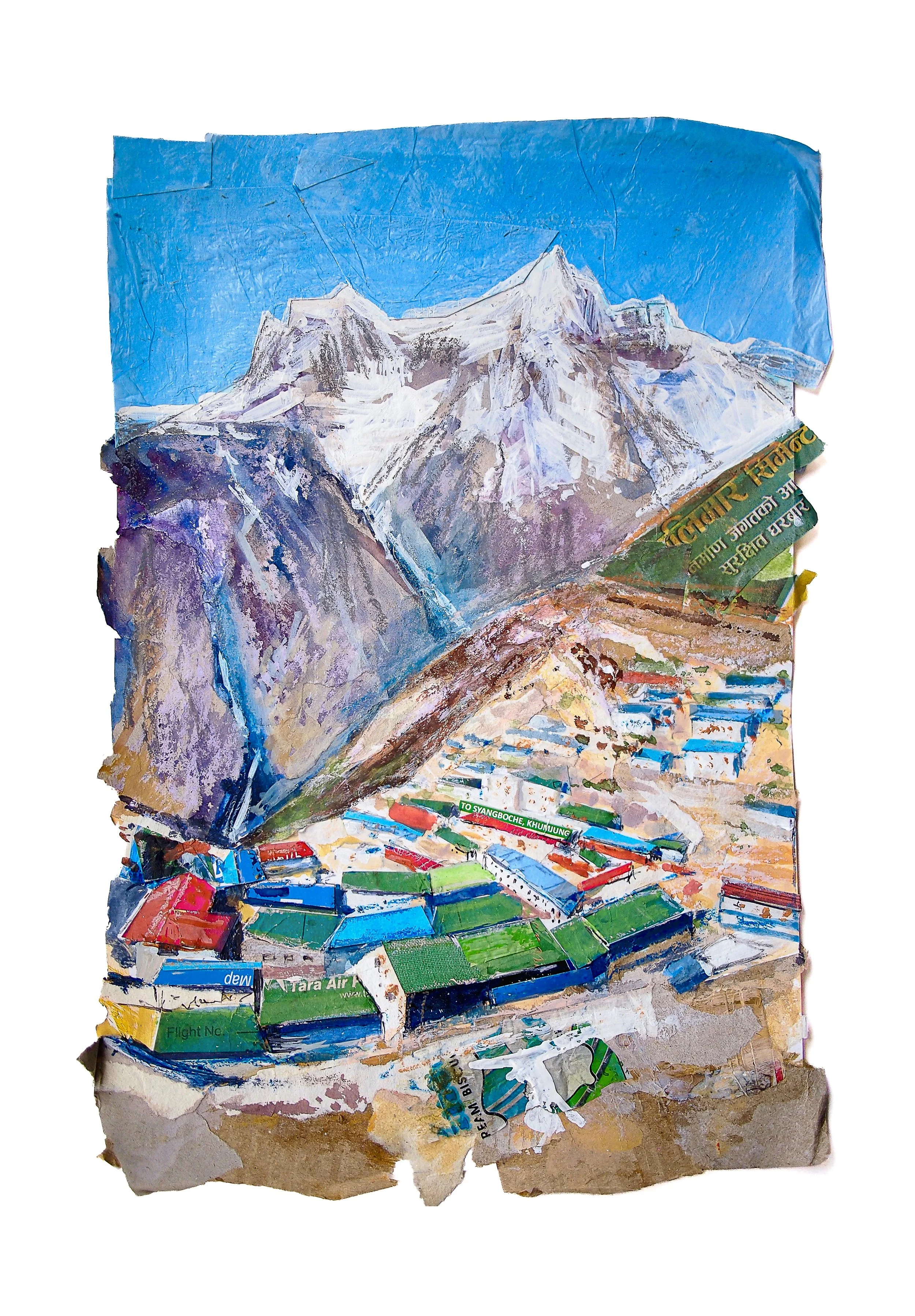
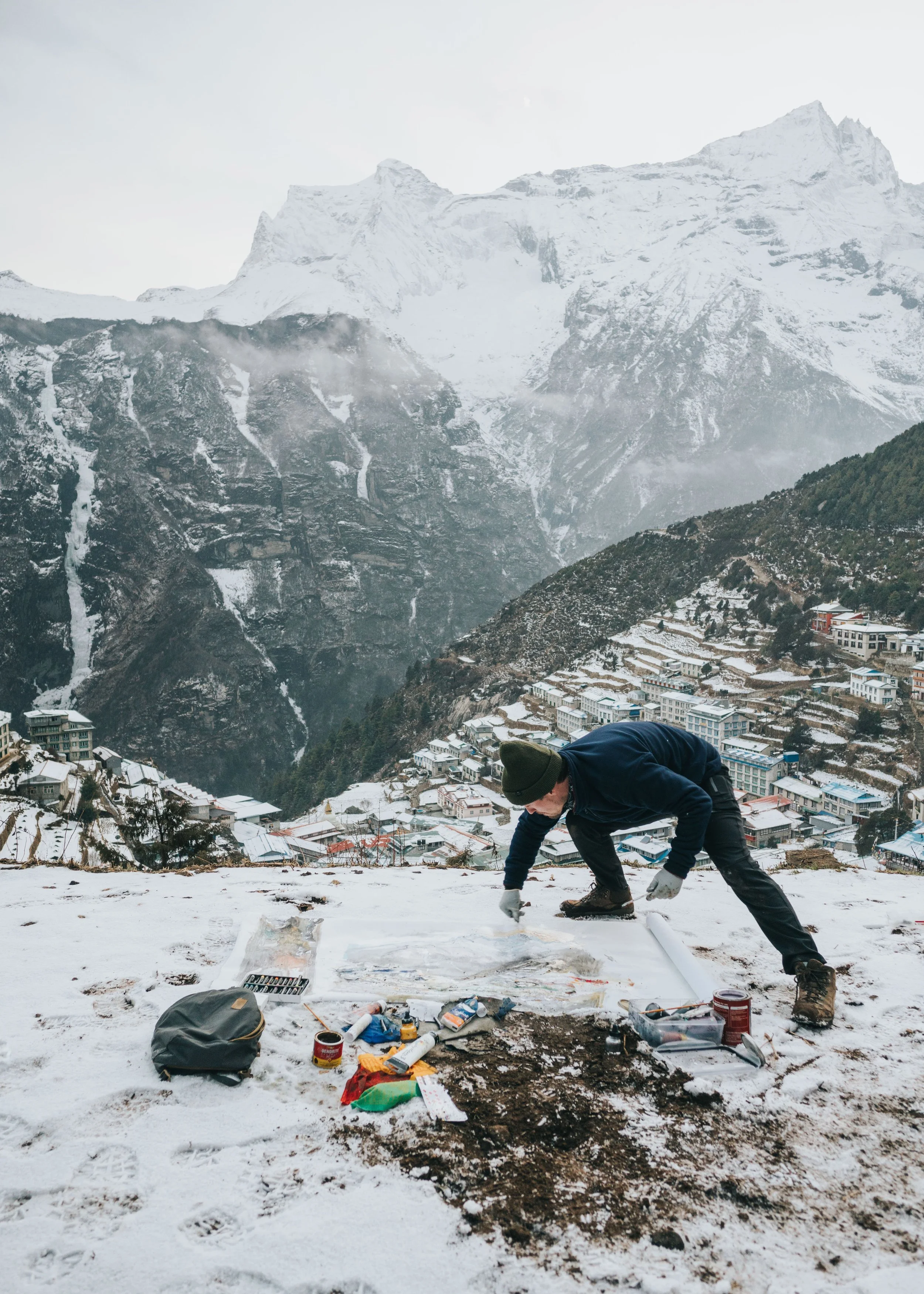
“The piece didn’t quite dry... stored the painting in the attic of the Ama Dablam Lodge. Cats may walk on it.”
SAGAMARTHA NEXT
On an acclimatisation hike above Namche Bazaar, we came across the beginnings of Sagarmatha Next. Its founder was standing among concrete blocks being chipped and shaped into bricks by a team of local builders. He explained his plans for an art residency where artists would find new ways of using waste collected from the Himalayas. It immediately struck a chord. I had been picking up rubbish along the trail and incorporating it into the collages I was making, so I showed him some of the work from my notebook. He loved the idea, and it felt like an unexpected meeting of two projects with the same instinct.
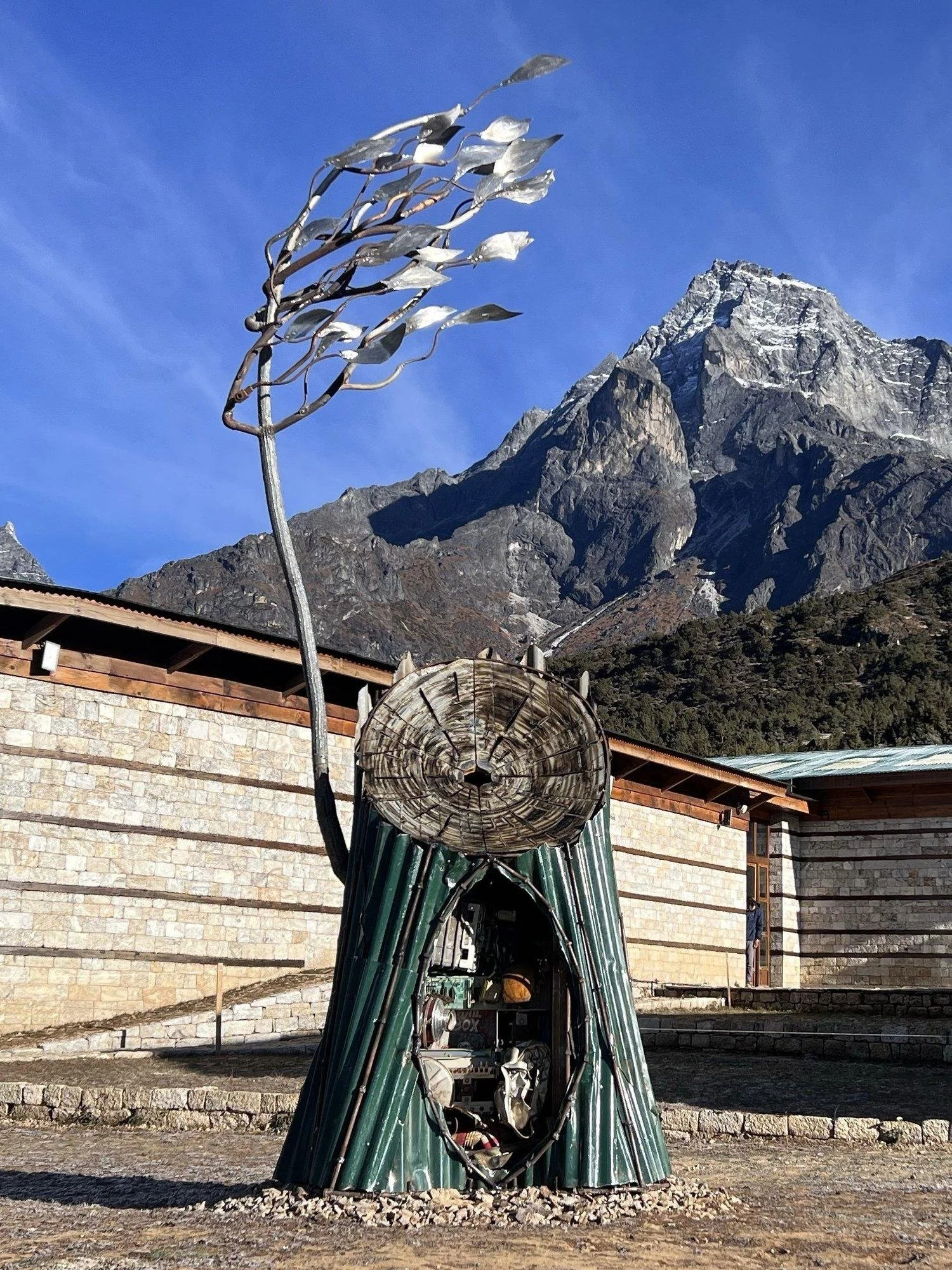
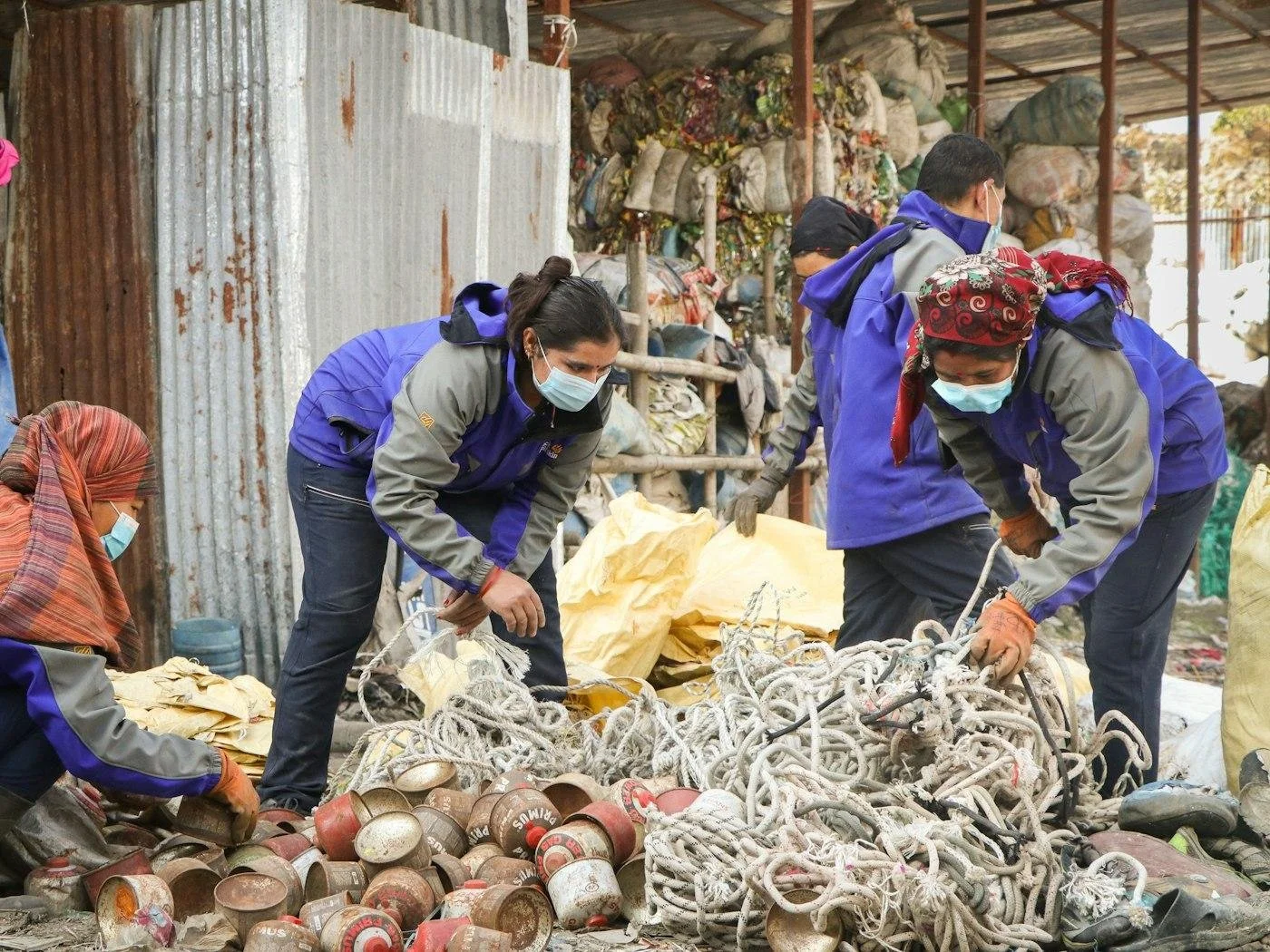
Today, Sagarmatha Next is fully operational, welcoming artists to work with the landscape, community and the problem of waste in the mountains.
TENGBOCHE
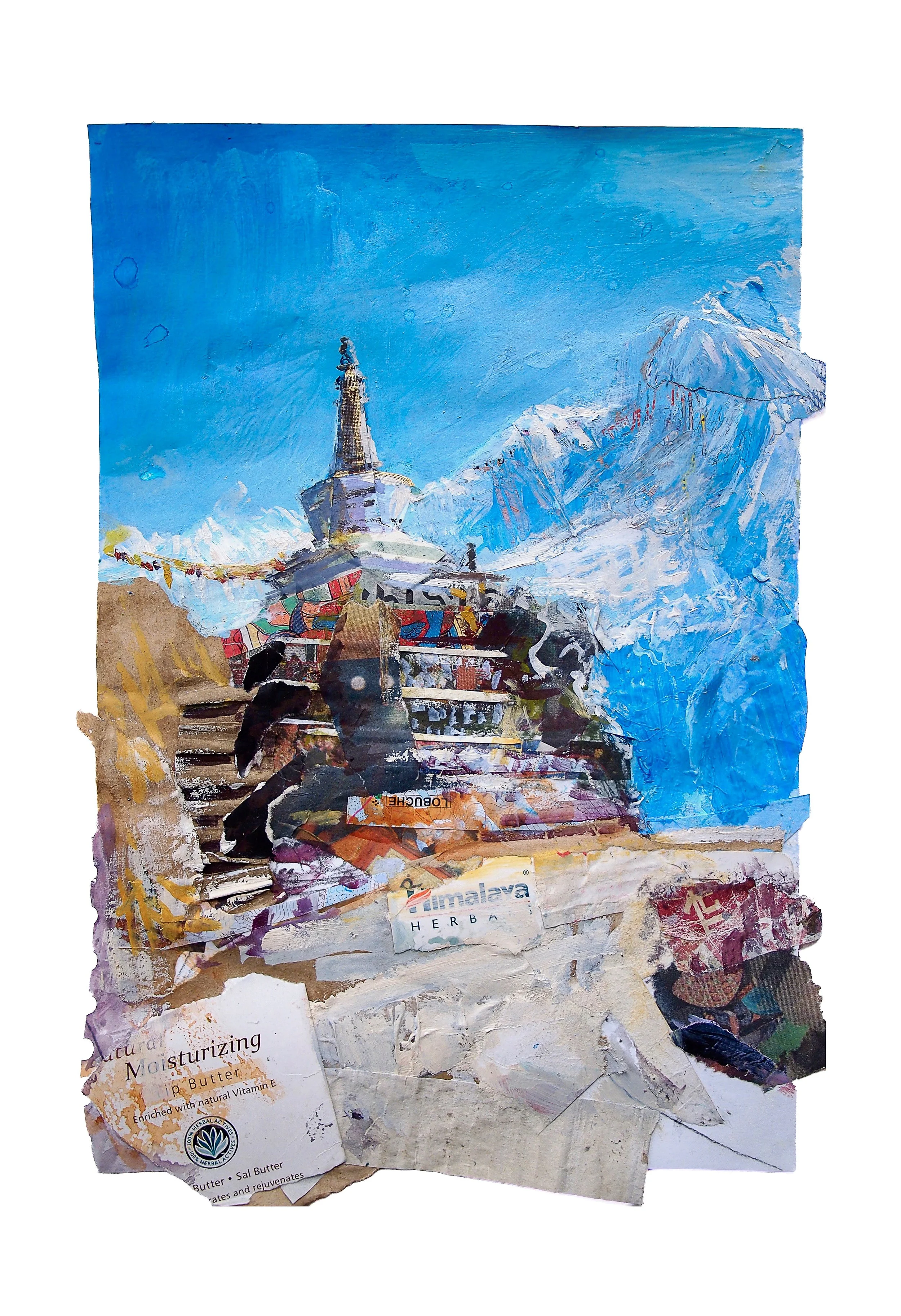
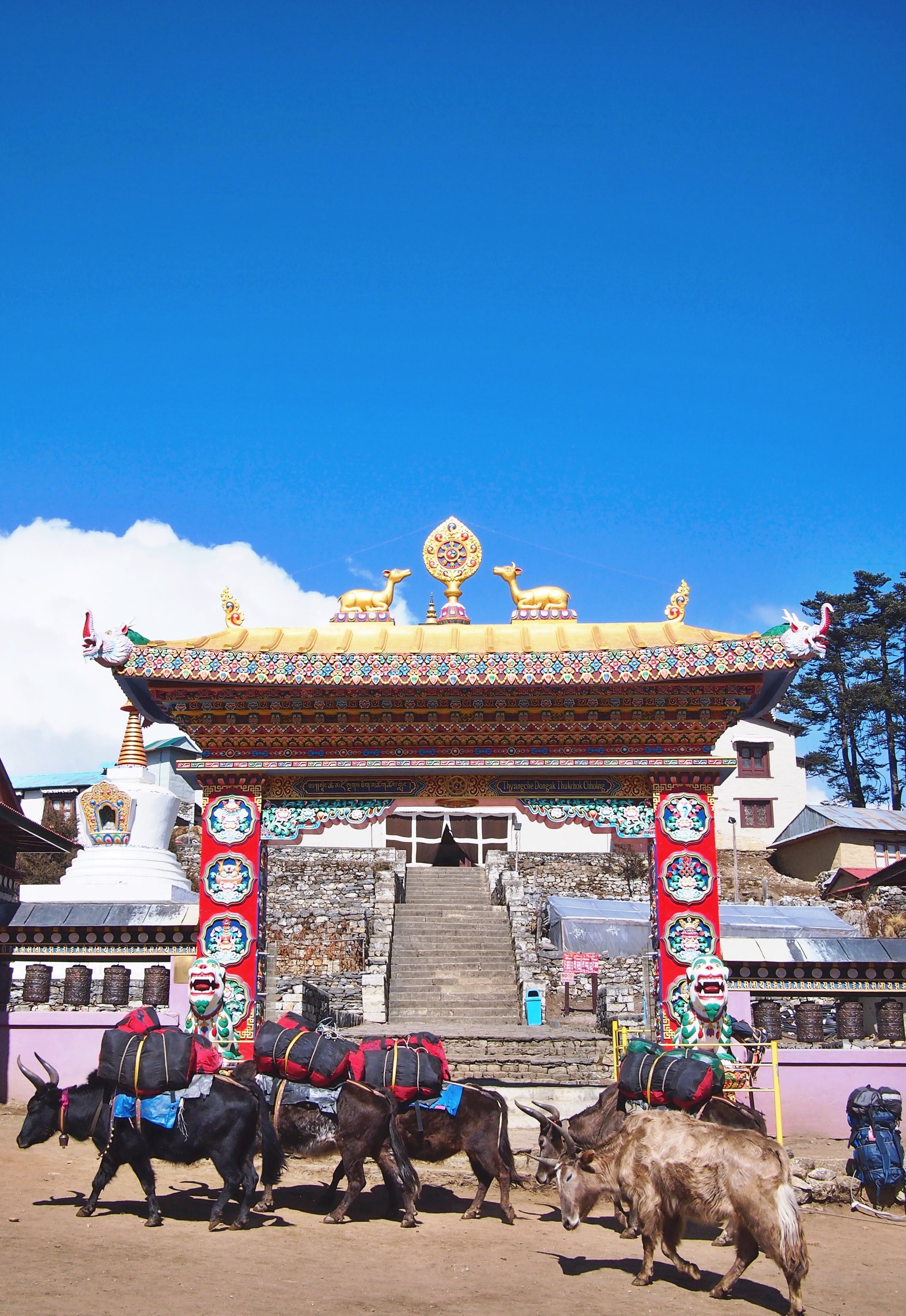
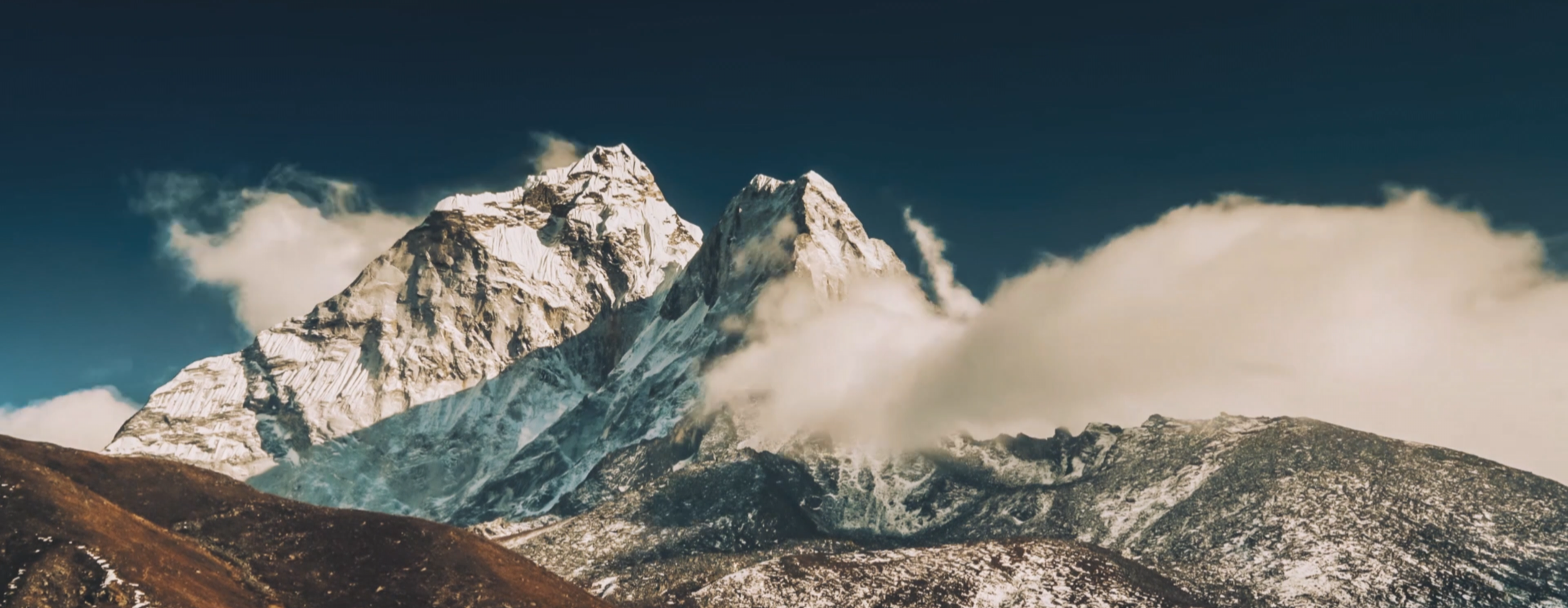
Beyond Namche the valley opened towards the great mountains of the Khumbu. Ama Dablam began to dominate the horizon as we made our way towards Tengboche Monastery.
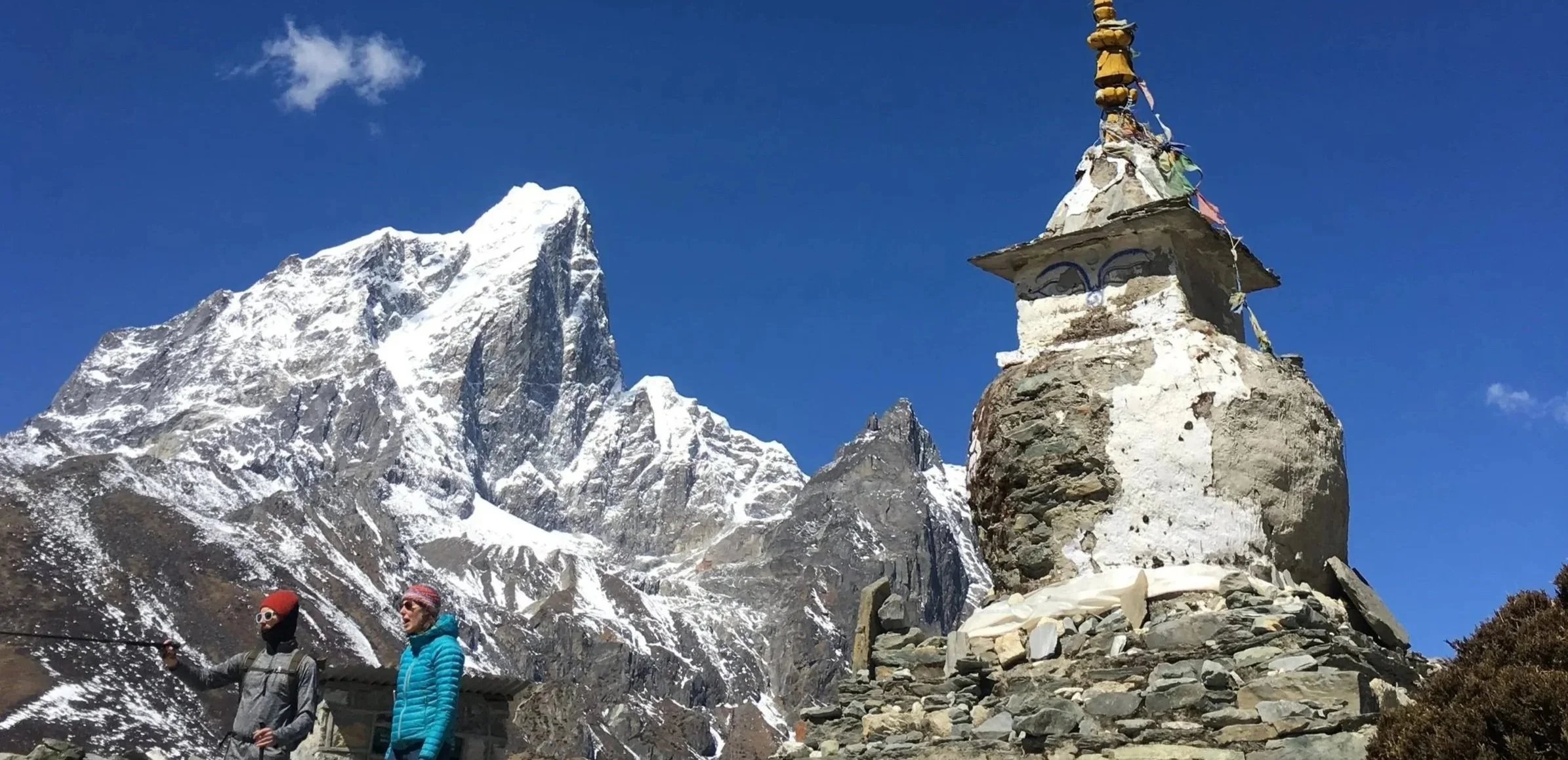
Sitting at 3,867 metres, the monastery is surrounded by an extraordinary circle of mountains. Prayer flags moved above the buildings while Everest, Lhotse and Nuptse appeared further up the valley.
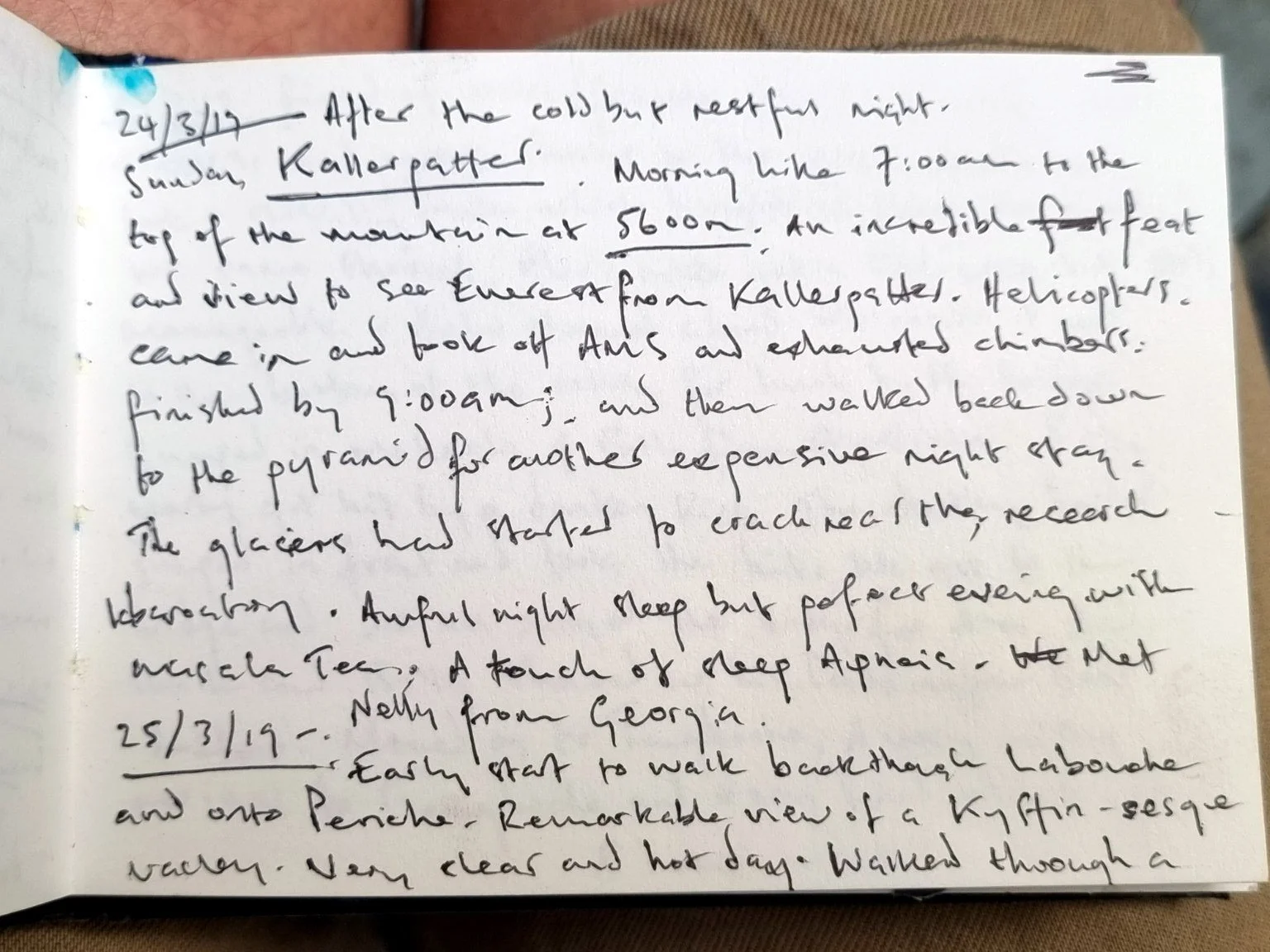
I continued drawing and gathering material as we walked: mountains, stupas, prayer stones, lodge interiors and fragments of life along the trail.
HIGHER IN THE VALLEY
From Tengboche we continued towards Dingboche.
The trees gradually disappeared, the villages became smaller and the altitude began to dictate our pace.
During an acclimatisation walk above Dingboche I wrote:
““Taking deep breaths every 12 steps up.””
Five eagles flew at head height up and down the valley.
Ahead lay Dughla, Lobuche and Gorak Shep. Beyond them, the Khumbu Glacier and Everest Base Camp.
We were getting closer.
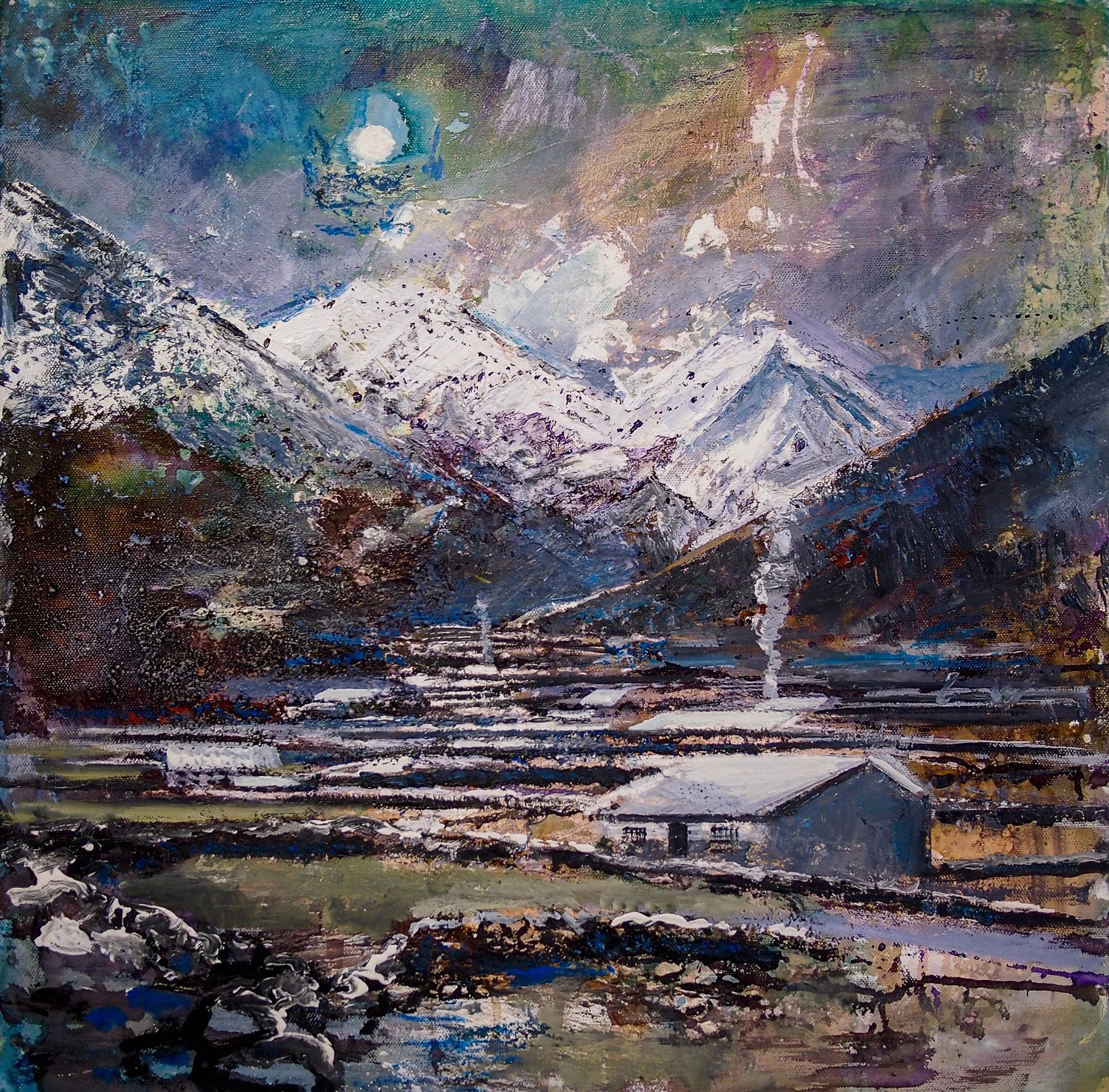
Dingboche, Island Peak - oil and mixed media
INGENUITY AT ALTITUDE
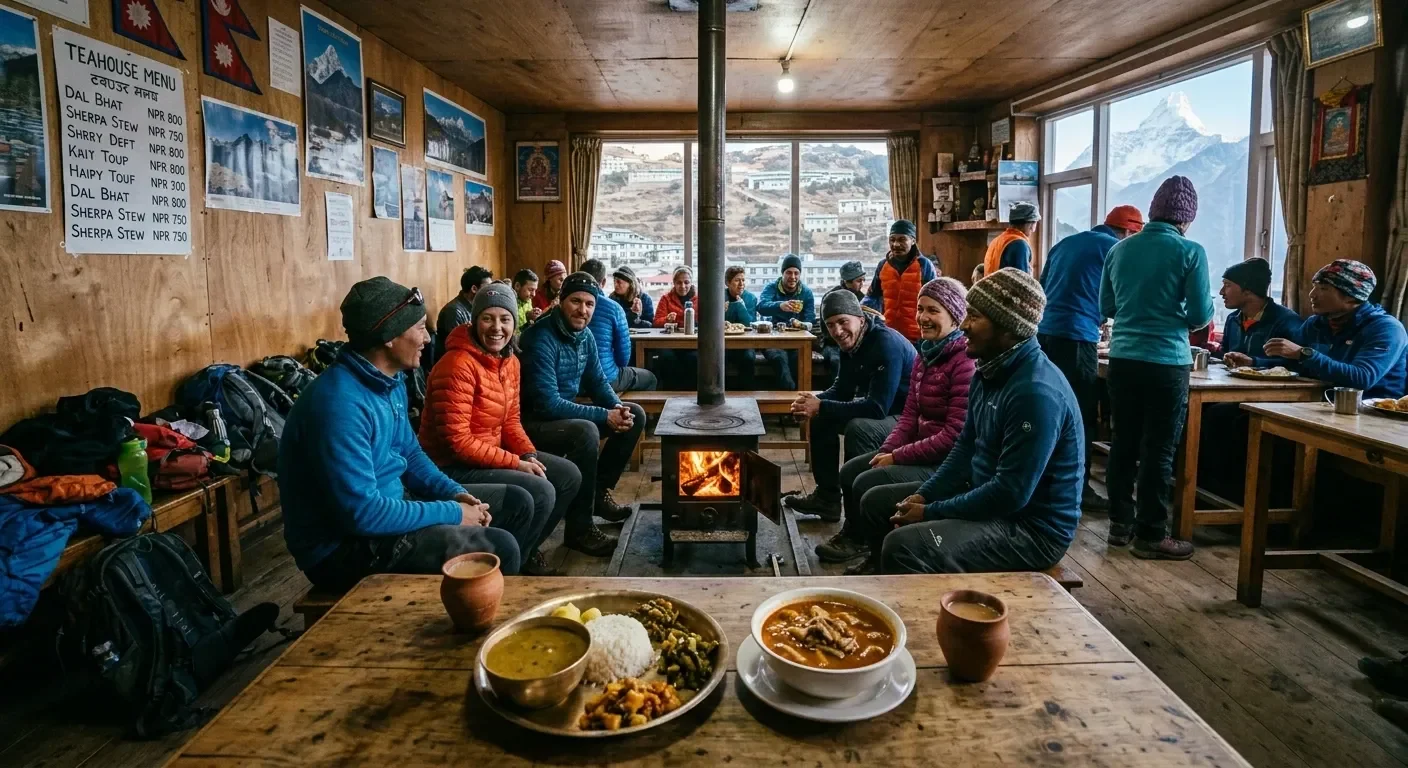
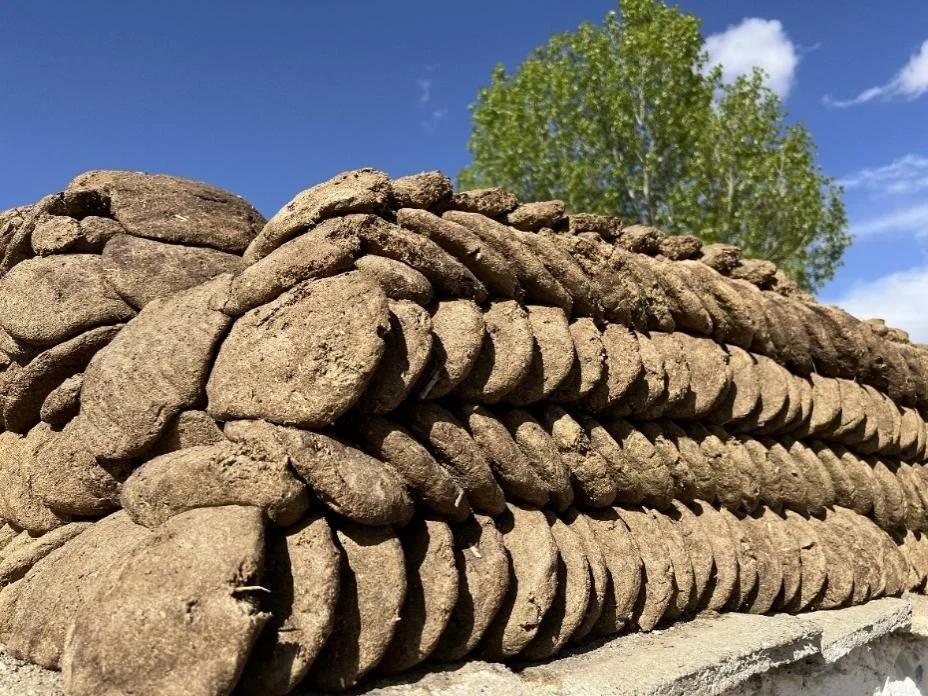
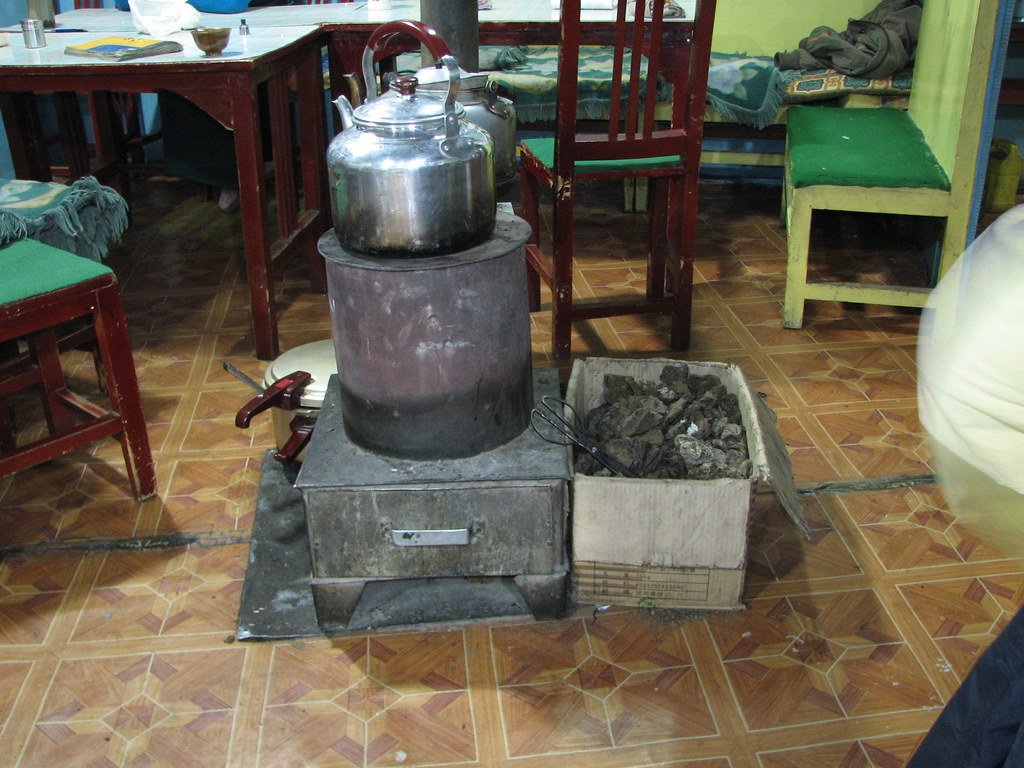
Life at this altitude depended on ingenuity. Above the tree line, fuel and resources were scarce and almost everything had travelled up the mountain on foot or by yak. Dried yak dung became fuel for the lodge stoves, providing warmth and a means of cooking. Outside, parabolic cookers concentrated the intense mountain sun to heat water.
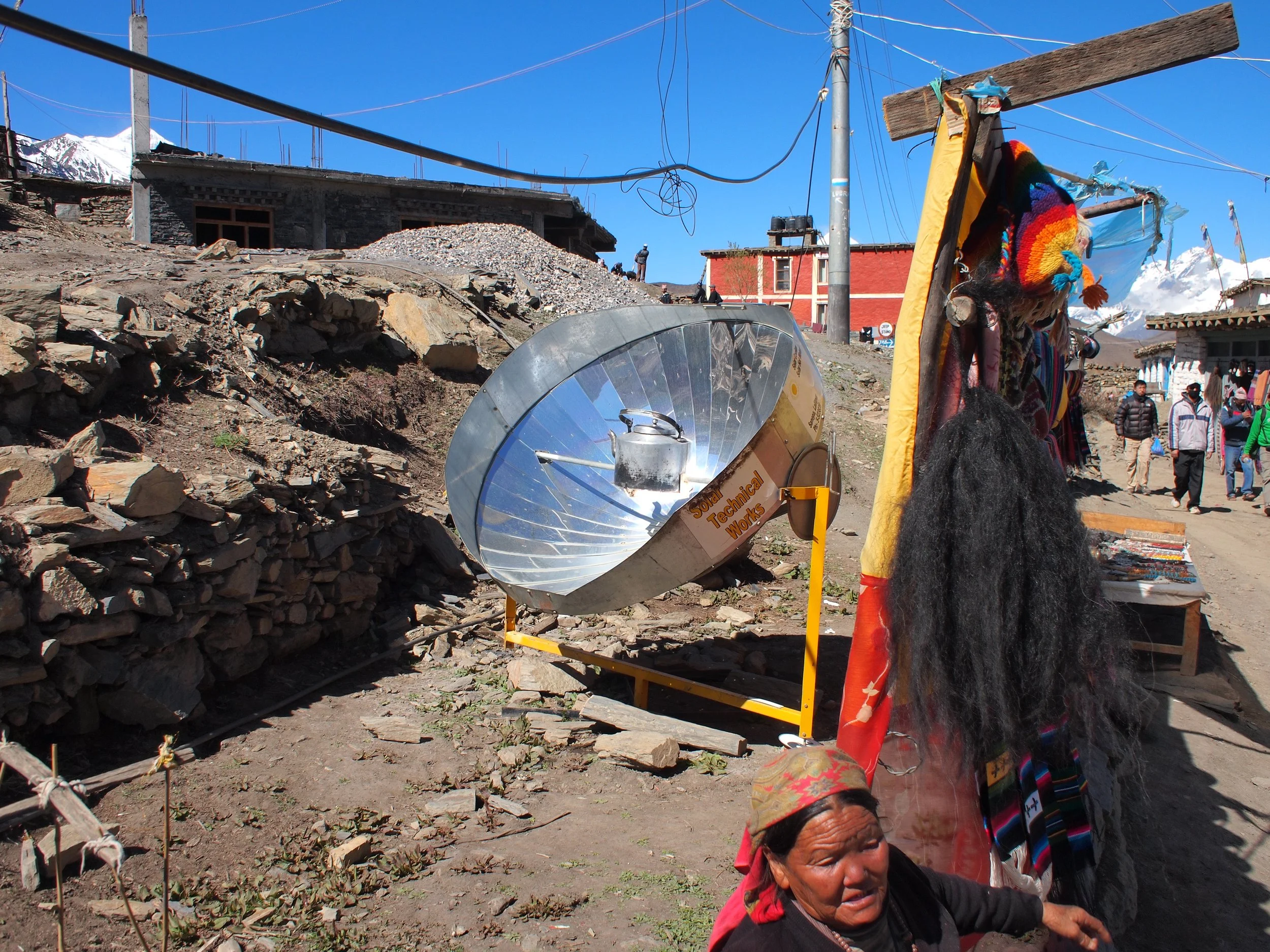
PARABOLIC COOKERS
What initially seemed improvised was, in fact, an extraordinary understanding of how to live in a difficult environment: using what the landscape and animals provided, wasting little, and adapting everyday life to the limitations of altitude
SCIENCE AT 5,000 METRES
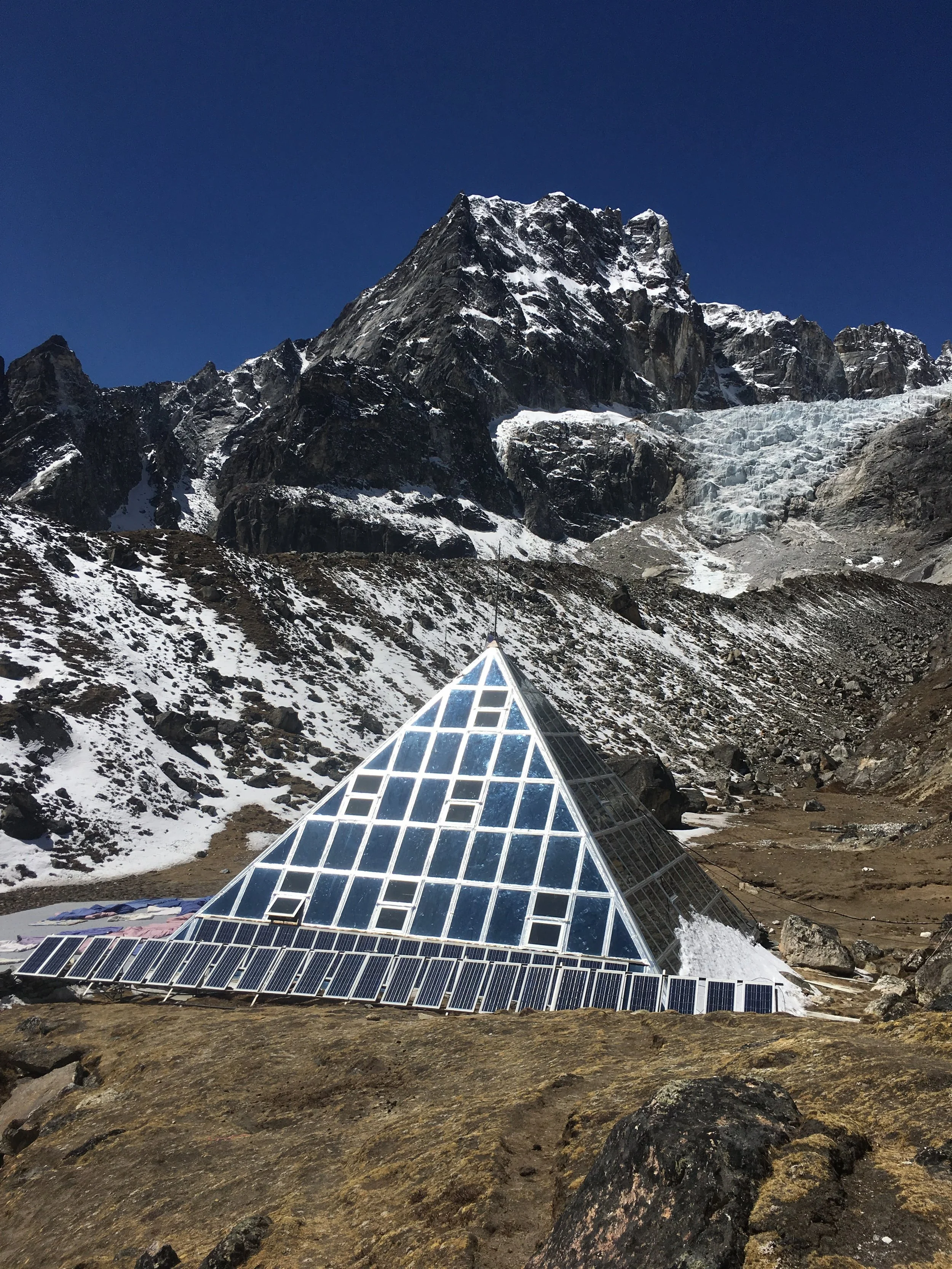
Not far from Lobuche stands an unexpected pyramid of glass, aluminium and steel. The Pyramid International Laboratory-Observatory was established in 1990 as a permanent base for scientific research at extreme altitude.
From here, researchers have studied the weather, atmosphere, glaciers, geology and the effects of altitude on the human body. A network of meteorological stations running through the Everest region has gathered decades of climatic data, turning this remote corner of the Khumbu into an important place for understanding how the high Himalaya is changing